


Transitioning from Marketplace to Medicare: Can You Keep Your Plan
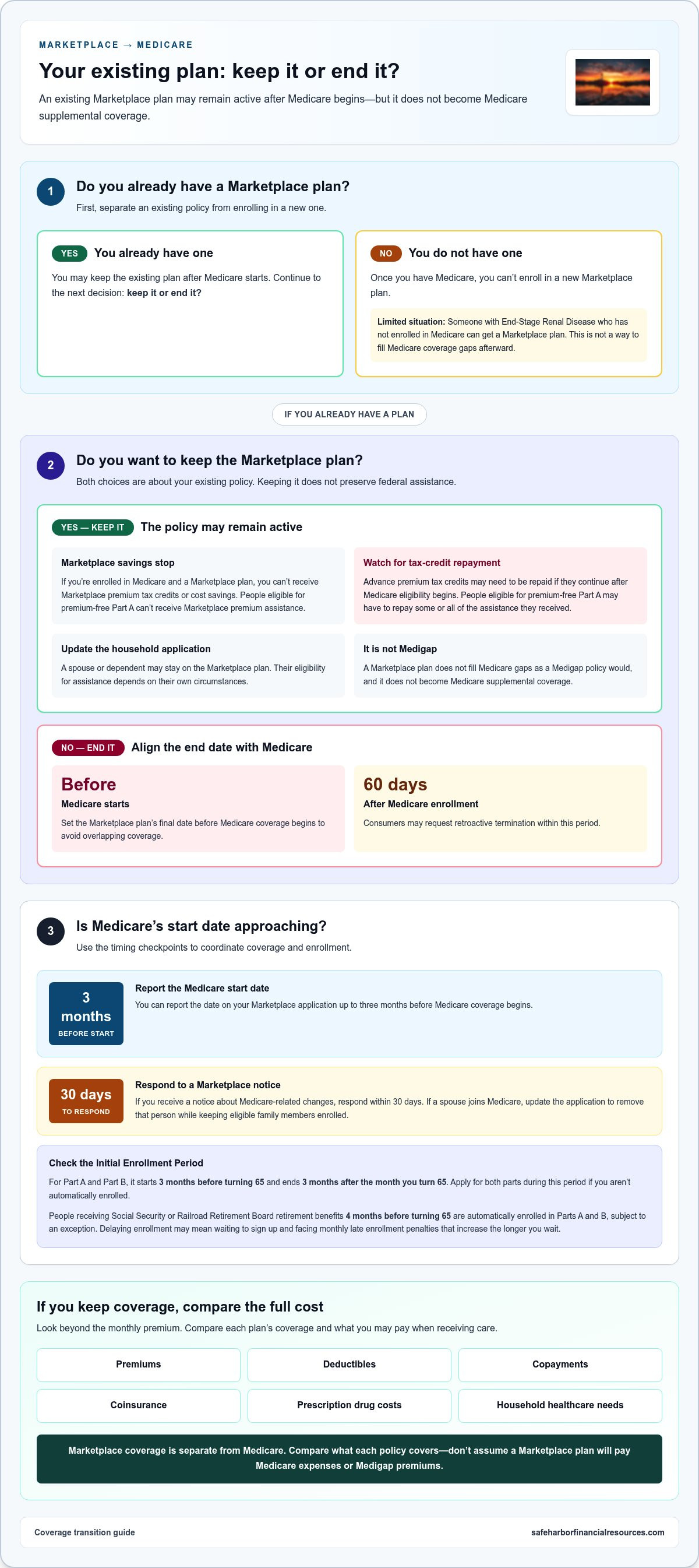
You can keep an existing Marketplace plan after Medicare starts, but you can’t enroll in a new Marketplace plan once you have Medicare. When you’re transitioning from Marketplace to Medicare, remember that having both doesn’t make you eligible for Marketplace premium tax credits or cost savings. According to the Centers for Medicare & Medicaid Services, you can report your Medicare start date on your Marketplace application up to 3 months before coverage begins.
It’s understandable to want continuous coverage without paying for benefits you no longer need. This article explains when to end a Marketplace plan, what happens if you keep it, and how an existing plan can sit alongside Medicare. You’ll also learn what to consider as you move into Medicare coverage, so you can make the transition with a clearer view of your options.
Can I choose Marketplace coverage instead of Medicare?
Your options depend partly on your eligibility for Medicare Part A. You can keep an existing Marketplace plan, but Medicare eligibility changes your access to financial assistance.
Managing Marketplace Coverage at Medicare Enrollment
Managing coverage means updating your Marketplace application to reflect Medicare’s start date. This helps align coverage dates and prevents Marketplace assistance from continuing when you’re no longer eligible. According to the Centers for Medicare & Medicaid Services, you can report a Medicare start date up to 3 months before Medicare starts.
If you receive a Marketplace notice about Medicare-related changes, respond within 30 days, according to the Centers for Medicare & Medicaid Services. When a spouse joins Medicare, update the application to remove that person while keeping eligible family members enrolled.
Ending or Keeping a Marketplace Plan
If you already have a Marketplace plan, you may keep it after Medicare begins, though your coverage options may change. If you end coverage, set its final date before Medicare starts to avoid overlapping coverage. According to the Centers for Medicare & Medicaid Services, consumers may request retroactive termination within 60 days after enrolling in Medicare.
Keeping the plan doesn’t preserve premium tax credits or cost-sharing reductions for someone with Medicare. People eligible for premium-free Part A also can’t receive Marketplace premium assistance. If your spouse or dependents remain on the plan, update the household application because their coverage and costs may change.
Medicare Enrollment Timing and Penalties
Transition when Medicare coverage is set to begin, rather than relying on Marketplace coverage to replace Medicare. Medicare says the Initial Enrollment Period for Part A and Part B starts 3 months before turning 65 and ends 3 months after the month you turn 65. Apply for both parts during this period if you aren’t automatically enrolled.
People receiving Social Security or Railroad Retirement Board retirement benefits four months before turning 65 are automatically enrolled in Parts A and B, subject to an exception. If you delay enrollment, you may have to wait to sign up and face monthly late enrollment penalties that increase the longer you wait.
Can I keep my Marketplace plan if I have Medicare?
An existing Marketplace plan may remain active after Medicare begins, but keeping it doesn’t preserve federal assistance. When transitioning from Marketplace to Medicare, remember that Medicare eligibility and eligibility for Marketplace savings are separate questions.
Premium Tax Credits and Cost Savings
Premium tax credits lower eligible enrollees’ Marketplace premiums, while cost-sharing reductions can lower expenses when they receive care. Medicare eligibility affects access to both forms of assistance. People eligible for premium-free Medicare Part A can’t receive Marketplace premium assistance. Those enrolled in Medicare and a Marketplace plan also can’t receive the tax credits or cost savings they previously received.
If other household members remain on the Marketplace plan, update their enrollment details separately. Their eligibility for assistance depends on their own circumstances, not simply the Medicare enrollee’s status.
Repaying Premium Tax Credits
You may have to repay advance premium tax credits if they continue after Medicare eligibility begins. These payments lower Marketplace premiums during the year and are reconciled when you file federal income taxes. People eligible for premium-free Part A who keep receiving Marketplace assistance may have to repay some or all of it. Report Medicare eligibility to keep the household’s assistance information current.
Comparing Coverage Costs
When transitioning from Marketplace to Medicare, compare the full cost of coverage, not just the monthly premium. Consider premiums, deductibles, copayments, coinsurance, prescription drug costs, and each household member’s healthcare needs. Marketplace plans and Medicare have different coverage structures, so compare what each plan covers and what you may pay when receiving care.
Marketplace plans alongside Medicare
An existing Marketplace plan and Medicare can be active together, but the Marketplace policy doesn’t become Medicare supplemental coverage. As you’re transitioning from Marketplace to Medicare, separate the question of keeping an existing plan from whether it fills Medicare coverage gaps.
No. Marketplace coverage isn’t Medigap and can’t fill Medicare gaps as a Medigap policy would. Medigap is a separate type of Medicare Supplement Insurance. Compare what each policy covers rather than assuming a Marketplace plan will pay Medicare expenses or Medigap premiums.
A Marketplace plan doesn’t affect a person’s Medicare coverage. If a spouse or dependent stays enrolled through the Marketplace, consider their coverage separately from the Medicare enrollee’s choices. In one household, a person may have Medicare while another remains on the existing Marketplace policy.
A separate situation applies to someone with End-Stage Renal Disease who hasn’t enrolled in Medicare: they can get a Marketplace plan. This applies before Medicare enrollment, not as a way to cover Medicare gaps afterward.
When transitioning from Marketplace to Medicare, treat the Marketplace plan as separate coverage, not as a Medicare supplement. Compare Medicare options based on what they cover and the needs they’re intended to meet.
Safe Harbor Financial Resources: Medicare Supplement Insurance (Medigap)
Safe Harbor Financial Resources offers Medicare Supplement Insurance (Medigap) for people considering how to manage Medicare costs after leaving Marketplace coverage. A Medigap policy is separate from a Marketplace plan and is designed to supplement Original Medicare. The decision should be based on your Medicare coverage needs, not on treating Marketplace insurance as a substitute.
If you’re comparing coverage after Medicare begins, consider how Medigap fits alongside Original Medicare and your healthcare needs. Ask which Medicare costs you want help managing and how a supplement fits into your coverage choices. Understanding these distinctions can make the transition easier and help you weigh your options without confusing Marketplace coverage with Medicare supplemental insurance.
For information about Medicare Supplement Insurance and your coverage options, contact Safe Harbor Financial Resources.
Choose your next step with confidence
As you’re transitioning from Marketplace to Medicare, focus next on how your Medicare choices fit your health needs and broader financial priorities. A coverage decision can shape more than one part of your plan, so take time to consider what you want your protection to address.
Safe Harbor Financial Resources offers Medicare Supplement Insurance (Medigap), Life Insurance with Living Benefits, and Term Life Insurance. These options serve different purposes, so consider each in the context of your priorities rather than treating one as a substitute for another.
For a clearer view of your options, contact Safe Harbor Financial Resources. You can take the next step at a pace that feels right and move forward with greater clarity.
Frequently Asked Questions
Do I need to do anything with the Marketplace during Medicare's Open Enrollment?
Not solely because Medicare’s Open Enrollment is underway. That annual period runs October 15-December 7 and concerns Medicare coverage choices. If your Medicare start date or household coverage changes, update your Marketplace application separately. For example, a spouse enrolling in Medicare may leave a Marketplace household plan while other family members remain enrolled.
Do I have to enroll in Medicare when I turn 65 if I have a Marketplace plan?
A Marketplace plan doesn’t enroll you in Medicare or replace Medicare enrollment. If you aren’t automatically enrolled, apply during your Medicare Initial Enrollment Period, which includes the months before and after your 65th birthday. Eligibility can also begin before 65 for people with certain disabilities, End-Stage Renal Disease, or ALS, so age alone doesn’t determine when to act.
When should I cancel my Marketplace plan after enrolling in Medicare?
Arrange to end the Medicare enrollee’s Marketplace coverage before Medicare begins, and make the change through your Marketplace application. Don’t assume the Marketplace will cancel it automatically. If a spouse or dependent still needs Marketplace coverage, update the household application to remove only the person moving to Medicare, rather than ending everyone’s plan.
Can I keep a Marketplace plan if I have Medicare?
You may keep an existing Marketplace plan after Medicare starts, but it won’t function as a Medicare supplement. Marketplace coverage may be an option before Medicare begins, but it is not a substitute for Medicare. For example, a Medicare enrollee may remain on an existing family policy while a spouse continues Marketplace coverage, though eligibility for assistance changes.
Will I lose Marketplace premium tax credits when I become eligible for Medicare?
Yes. If you’re eligible for premium-free Medicare Part A, you can’t receive Marketplace premium assistance. If advance tax credits continue after Medicare eligibility begins, some or all may need to be repaid when you file federal income taxes. Review the household’s tax-credit information after reporting the Medicare enrollee’s change, because remaining members’ eligibility may differ.



Comments