


How to Appeal a Medicare Denial and Challenge a Decision
A Medicare denial isn’t always the final word: for Original Medicare, submit a written redetermination request within 120 days of receiving your Medicare Summary Notice, according to the Centers for Medicare & Medicaid Services. How to appeal a Medicare denial depends on your coverage: Medicare Advantage and Part D plans have their own appeal instructions, which they must provide in writing. In Palm Beach Gardens, Florida, start by checking the denial notice and following the instructions for your plan.
A denial can feel confusing, especially when you believe a service or prescription is still needed. This guide explains how to appeal a Medicare denial under Original Medicare and how the separate processes work for Medicare Advantage and Part D. You’ll learn what to include, how to respond, and when an expedited appeal may apply.
Appealing Medicare Advantage and other health plan decisions
First, identify whether the denial came from Original Medicare, Medicare Advantage, or a Part D drug plan. Then follow the appeal route and deadline stated in the notice.
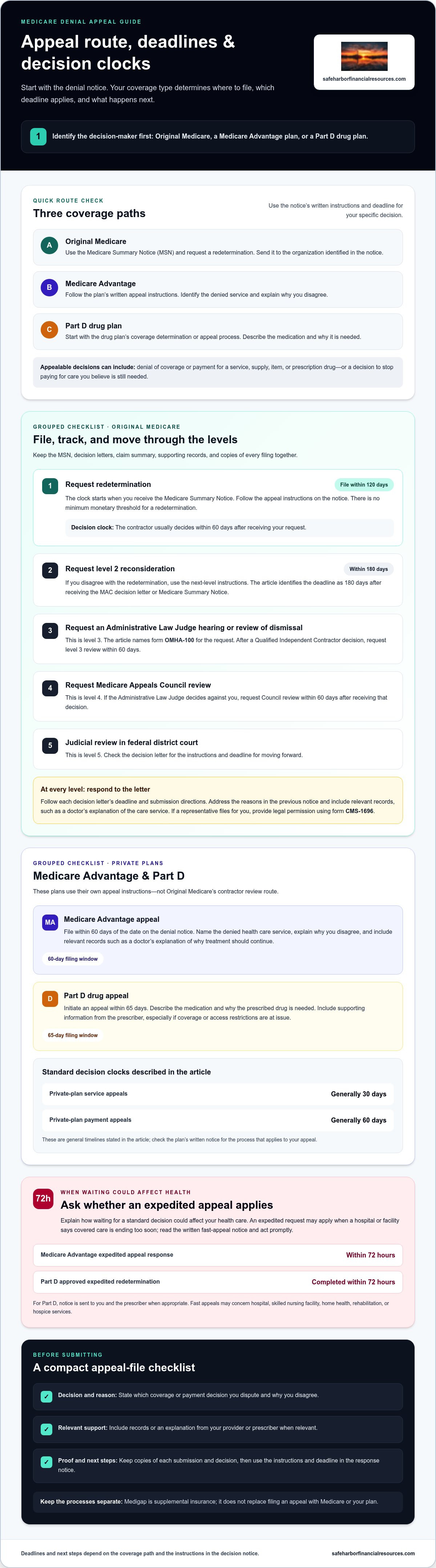
Identify the Type of Medicare DecisionCheck whether the decision denies coverage or payment for a service, supply, item, or prescription drug. These are appealable decisions, including a plan’s decision to stop paying for care you believe is still needed. According to the Centers for Medicare & Medicaid Services, people with Original Medicare have 120 days after receiving a Medicare Summary Notice to request a redetermination. Use the appeal instructions on the notice.
Review Appeal Decision TimelinesSend the appeal to the organization that issued the denial, and state whether waiting could threaten your health. Standard private-plan service appeals generally receive decisions within 30 days; payment appeals, within 60 days. According to the Centers for Medicare & Medicaid Services, a Medicare Advantage plan must respond to an expedited appeal within 72 hours. For Part D, an approved expedited redetermination must be completed, with notice to you and the prescriber when appropriate, within 72 hours.
Check Redetermination Notification TimingTrack when the Original Medicare contractor receives your redetermination request and watch for its decision notice. A contractor usually decides within 60 days after receiving the request. If you disagree with that decision, according to the Centers for Medicare & Medicaid Services, you have 180 days after receiving the MAC decision letter or Medicare Summary Notice to request a level 2 reconsideration. Follow the next-level instructions in the notice.
Consider the Cost of AppealingYou can appeal an Original Medicare denial even if the claim amount is small. A redetermination has no minimum monetary threshold, so the amount at stake does not affect your right to request review. For Medicare Advantage or Part D, follow the plan’s written appeal instructions. State which coverage or payment decision you dispute, why you disagree, and include relevant information from your prescriber or provider.
How to appeal a denied Medicare claim
Use the decision notice to identify your appeal level and the next filing step. Original Medicare has five levels, including review by a federal district court.
Follow the Five Appeal LevelsStart with a redetermination, then request level 2 reconsideration if you disagree. The third level is an Administrative Law Judge hearing or review of dismissal, requested with form OMHA-100. Level 4 goes to the Medicare Appeals Council; level 5 may proceed to judicial review in federal district court. Each decision letter explains how to move forward, so keep the notice with your claim summary and appeal papers.If a hospital or facility says your care is ending, read the written fast-appeal notice before services stop. It explains how to request an expedited review when you believe Medicare-covered care is ending too soon. This may apply to hospital, skilled nursing facility, home health, rehabilitation, or hospice services.
Continue to Later Appeal LevelsFollow the deadline and submission directions in each decision letter. After a Qualified Independent Contractor decision, request level 3 review within 60 days. If the Administrative Law Judge decides against you, request Medicare Appeals Council review within 60 days after receiving that decision. A later appeal should address the reasons in the prior notice and include relevant records, such as a doctor’s explanation of the care service.Keep copies of every filing and decision. If a representative files for you, provide legal permission using form CMS-1696. This helps keep the appeal record organized as it moves through the levels. For a hospital fast appeal, act on the provider’s notice promptly, because it concerns care that is scheduled to end.
Medicare Advantage and Part D appeals
Use the plan’s written instructions to challenge a coverage decision. Medicare Advantage and Part D appeals follow plan-specific procedures, not Original Medicare’s contractor review route.
File a Medicare Advantage appeal promptly. According to the Centers for Medicare & Medicaid Services, file within 60 days of the date on the denial notice. Identify the denied health care service, explain why you disagree, and include relevant records, such as a doctor’s explanation of why treatment should continue. Follow the plan’s submission instructions.
Start a Part D appeal with the drug plan. If a prescription drug is denied, request a coverage determination or challenge an existing determination through the plan. Part D members have 65 days to initiate an appeal. Describe the medication and explain why the prescribed drug is needed. Include supporting information from the prescriber, especially when the denial concerns coverage or access restrictions.
Request an expedited review when urgency matters. Explain how waiting for a standard decision could affect your health care. A Medicare Advantage plan must respond to an expedited appeal within 72 hours. For Part D, an approved expedited redetermination must be completed within 72 hours, with notice sent to you and the prescriber when appropriate. A hospital or treatment schedule may make prompt action especially important.
Read the decision before moving forward. If the plan denies your written appeal, check its decision notice for the next appeal level and filing instructions. Keep the determination, supporting documents, and submission records together. If a representative handles the appeal, include the required appointment or authorization paperwork.
Safe Harbor Financial Resources: Medicare Supplement Insurance (Medigap)
Safe Harbor Financial Resources offers Medicare Supplement Insurance (Medigap) for people considering how supplemental coverage fits alongside Original Medicare. Medigap is separate from the appeals process. It does not replace filing an appeal with Medicare or your plan when a service, item, or claim is denied. Reviewing your coverage choices can help clarify how supplemental insurance fits your health coverage needs.
If you’re considering Medigap or reviewing your Medicare coverage after a denial, Safe Harbor Financial Resources can help you explore your insurance options. For a Medicare claim appeal, follow the instructions and deadlines in the denial notice. Contact Safe Harbor Financial Resources to discuss your coverage needs.
Take the Next Step With Confidence
Knowing how to appeal a Medicare denial can help you address a coverage dispute while keeping broader financial decisions in view. An appeal concerns a specific Medicare decision; insurance planning is a separate conversation about the protection you want. After reviewing your notice, note any questions that remain and address them one at a time.
Safe Harbor Financial Resources offers Medicare Supplement Insurance (Medigap), Life Insurance with Living Benefits, and Term Life Insurance. These options serve different planning needs, so focus on the coverage question that matters most to you and explore it at your own pace. For support reviewing these insurance options, connect with Safe Harbor Financial Resources. A clear next step can make planning feel more manageable.
Frequently Asked Questions
Can someone help me file an appeal?
Yes. You can authorize another person to help with an appeal by completing form CMS-1696. If you live in Palm Beach Gardens, Florida, free, personalized Medicare counseling is also available through your local State Health Insurance Assistance Program. Call 1-877-839-2675 to reach SHIP. Keep your appeal notice and related records available so your representative can address the specific decision.
How can I start an appeal for a denial from my Part D plan?
Ask your drug plan to review its coverage decision, following the appeal directions in the notice. Explain which prescription was denied and why you believe it should be covered. Your prescriber can provide supporting information. You can also appeal a drug management program’s “at-risk” designation if it limits access to covered drugs such as opioids or benzodiazepines.
How do appeals work?
To understand how to appeal a Medicare denial, first identify who made the decision and what the notice says. An appeal requests review of the disputed service, item, or prescription, with your reasons and supporting information. Keep copies of everything you submit and receive. If someone is helping you, include authorization paperwork so Medicare or the plan can recognize that person’s role.
What happens if you are denied Medicare coverage?
A denial does not automatically prevent you from challenging the decision. To understand how to appeal a Medicare denial, read the notice, identify the reason for the decision, and address it with relevant supporting information. If you missed an Original Medicare appeal deadline, you may still request review by showing good cause for the delay. Explain why you filed late and include evidence supporting your explanation.
What is a Medicare denial?
A Medicare denial is a decision not to cover or pay for a claimed health care service, supply, item, or prescription drug. It differs from a complaint about care quality: a complaint raises concerns about care or services, while an appeal challenges a coverage or payment decision. Identifying the issue helps you choose the appropriate next step.



Comments