


Medigap for New Florida Residents: Switching Plans and Prices
Moving to Palm Beach County and establishing a new home in Florida doesn’t automatically mean you need to replace your Medigap coverage. An existing policy stays in force when you relocate, and Medigap for new Florida residents can be switched by applying for a different plan, although most applications go through medical underwriting unless you qualify for a guaranteed-issue right. Florida has 10 standard plan types, with Plans C and F unavailable to people new to Medicare.
After settling into the Palm Beach Gardens area, it’s understandable to compare coverage options, especially when the local rules and premiums are unfamiliar. The key point is that being allowed to apply for a new plan does not always guarantee approval or the same price.
This guide from Safe Harbor Financial Resources explains when you may be able to switch, how Florida issue-age pricing works alongside possible premium increases, and why Medigap does not cover prescription drugs. You’ll have a clearer picture of what to consider before changing your coverage.
Can You Switch Medigap Plans in Florida?
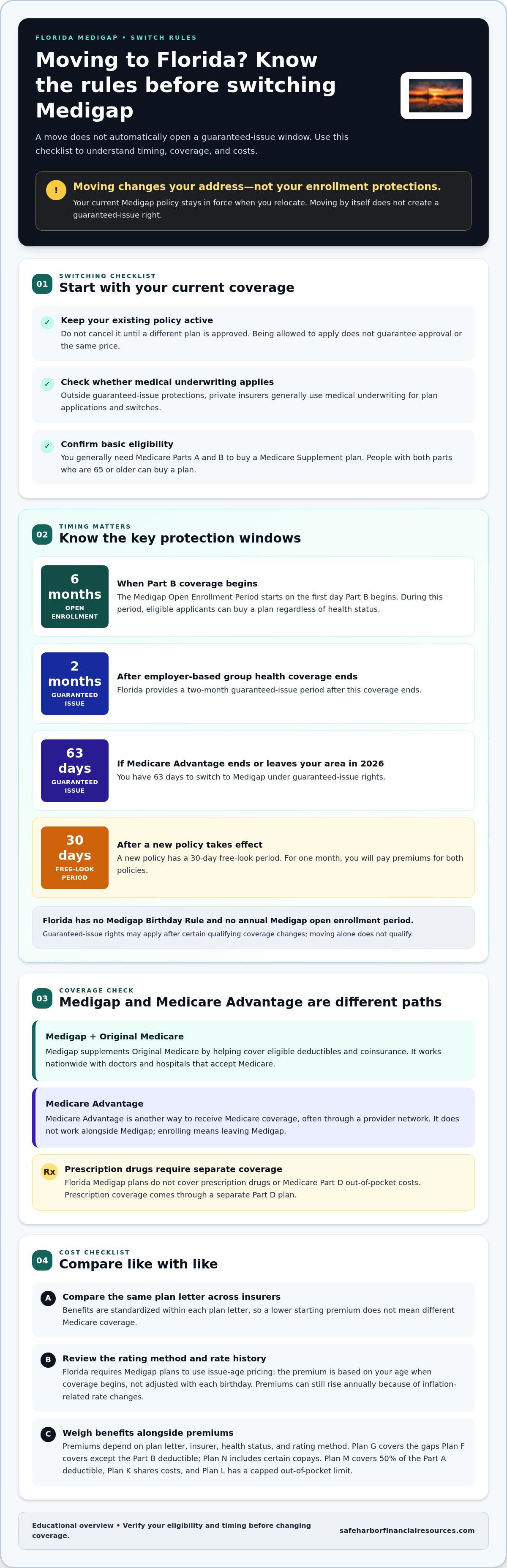
Yes, but moving to Florida doesn’t automatically guarantee a new policy. A guide to Medigap for new Florida residents starts with Florida’s 10 standardized plan types. Plans C and F aren’t available to people newly eligible for Medicare. Outside guaranteed-issue periods, private insurance companies generally use medical underwriting. Keep your current policy active until another plan is approved.
Some coverage changes create special protections. Florida provides a two-month guaranteed-issue period after employer-based group health coverage ends. If your Medicare Advantage plan ends or leaves your area in 2026, you have 63 days to switch to Medigap under guaranteed-issue rights. A new policy also has a 30-day free-look period. For one month, you’ll pay premiums for both policies.
Medigap supplements Original Medicare by helping cover eligible deductibles and coinsurance. Medicare Advantage is another way to receive Medicare coverage, often through a provider network. The two do not work together, so enrolling in Medicare Advantage means leaving Medigap. For snowbirds, Medigap works nationwide with doctors and hospitals that accept Medicare, unlike network-based Advantage coverage.
Florida Medicare counseling resources can help clarify how these insurance choices differ. People under 65 who receive Social Security disability benefits for at least 24 months may qualify for Original Medicare under the stated eligibility conditions, according to the Social Security Administration.
When considering Medigap for new Florida residents, compare provider access, cost-sharing, and enrollment protections before deciding. Medicare’s official information can clarify how Original Medicare, Medicare Advantage, and supplements fit together. Consider where you receive care and which providers you use as you weigh your options.
Florida issue-age pricing and annual premium increases
Florida issue-age pricing bases a Medigap premium on your age when coverage begins, rather than adjusting it with each birthday. Premiums can still rise annually because of inflation-related rate changes.
Plan-letter benefits are standardized. Plan G covers the gaps Plan F covers except for the Part B deductible, while Plan N includes certain copays. Florida insurers may use community-rated, issue-age-rated, or attained-age-rated methods; Florida also requires Medigap plans to use issue-age pricing.
Premium Comparisons and Insurer Rate Changes
To compare premiums, look at the cost of the same standardized plan across insurers, then consider each insurer’s rate changes. Because benefits are standardized within each plan letter, a lower starting premium does not mean different Medicare coverage. Compare the current premium with the insurer’s history of increases, and keep in mind that issue-age pricing does not prevent annual adjustments.
Florida premium ranges vary widely by plan, insurer, and health status. For context, published Plan G and Plan N estimates use different years, including 2024 and 2026, so compare like-for-like dates and plan types rather than treating one sample as a current quote. A government-set Medicare benefit doesn’t make private supplement insurance premiums identical.
Factors Affecting Medigap Premiums
A Medigap premium depends on the plan letter, insurer, health status, and rating method. High-deductible Plan G has a different premium range from standard Plan G, while Plan N has different cost-sharing from Plan G. These design differences affect how premiums relate to out-of-pocket costs, coinsurance, and deductibles.
Plan M covers 50% of the Part A deductible; Plan K shares costs, and Plan L has a capped out-of-pocket limit. Compare those benefits alongside premiums, not popularity alone.
Are There Florida Medicare Supplement Plans with Prescription Drug Coverage?
No. Florida Medigap plans do not cover prescription drugs or Medicare Part D out-of-pocket costs. Medigap works alongside Original Medicare; prescription coverage comes through a separate Part D plan. Moving to Florida alone does not create a guaranteed-issue right. Your existing Medigap policy stays in force when you move between Florida and another state.
To buy a Medicare Supplement plan, you generally need Medicare Parts A and B. People with both parts who are 65 or older can buy a plan. The six-month Medigap Open Enrollment Period starts on the first day Part B coverage begins, according to the Centers for Medicare & Medicaid Services. During that period, eligible applicants can buy a plan regardless of health status.
After that enrollment period, most plan switches require medical underwriting. Florida has no Medigap Birthday Rule or annual Medigap open enrollment period. Guaranteed-issue rights may apply after certain qualifying coverage changes, but moving by itself does not qualify. The distinction matters: a move changes your address, not the protections tied to your enrollment history.
Florida’s Medigap market includes nearly 940,000 enrollees. Plans F, G, and N account for 87% of members: Plan F has 47%, Plan G has 29%, and Plan N has 11%. These shares describe enrollment, not prescription benefits. No Medigap plan replaces a standalone Part D plan for drug coverage.
Consider your Part D needs separately from hospital and emergency cost-sharing. A licensed insurance agent can explain how Medigap enrollment timing and prescription coverage fit together.
Safe Harbor Financial Resources: Medicare Supplement Insurance (Medigap)
Safe Harbor Financial Resources offers Medicare Supplement Insurance (Medigap) for people comparing coverage options or considering a plan change. If you’re settling in Florida, reviewing your existing policy, enrollment timing, and premium structure can help clarify what to consider before applying for a new plan.
Medigap is not prescription drug coverage, and it does not work alongside Medicare Advantage. Keeping these distinctions clear can help you decide whether a supplement fits your Medicare coverage needs. Safe Harbor Financial Resources also offers Life Insurance with Living Benefits, Term Life Insurance, and Whole Life Insurance for separate protection needs.
For a conversation about Medicare Supplement Insurance and your coverage choices, contact Safe Harbor Financial Resources or visit its website.
Make Your Next Coverage Decision With Clarity
Choosing Medigap for new Florida residents involves more than selecting a plan. It’s an opportunity to match coverage with the care you expect to use and the costs you’re comfortable managing. Before changing coverage, consider how a new policy fits your priorities and whether the timing works for you.
Safe Harbor Financial Resources offers Medicare Supplement Insurance, Life Insurance with Living Benefits, and Term Life Insurance. If you’d like help considering your Medigap options alongside your coverage needs, contact Safe Harbor Financial Resources. A thoughtful next step can make a complex decision feel more manageable and help you move forward with greater confidence.
Frequently Asked Questions
Does Medigap Travel With You Between Florida and Your Other Home?
Yes. A Florida Medigap policy stays in force when you spend part of the year elsewhere, and you do not need to reapply just because your address changes. Coverage works nationwide with any doctor or hospital that accepts Medicare, regardless of the state that issued your policy. For snowbirds, the practical question is whether the provider accepts Medicare, not which home you’re visiting.
What Is the “Free Look Period”?
It’s a window to review a new Medigap policy after its coverage begins. Florida provides 30 days, and cancelling within that period can qualify you for a full premium refund. If you’re switching plans, you may pay premiums for both policies for one month. Keep the old policy active until the new one is approved and in place.
Why Should You Consider a Medigap Plan?
A Medigap plan can help with eligible Medicare deductibles and coinsurance that Original Medicare doesn’t reimburse. Original Medicare pays 80% of covered hospital and medical services, leaving beneficiaries responsible for the remaining 20%. A supplement can help manage some of those costs, but benefits vary by plan letter. It doesn’t provide prescription drug coverage.
Does Florida Have Any “Under 65” State-Specific Rules?
Yes. Florida requires Medigap plans available to people age 65 and older to also be available to people under 65. Eligibility for Medicare is separate: people under 65 who receive Social Security disability benefits for at least 24 months may qualify for Original Medicare, according to the Social Security Administration. Review plan availability in light of your Medicare eligibility.
How Does Florida’s Issue-Age Rating Protect Me From Price Hikes?
Issue-age pricing means your premium does not automatically rise just because you have another birthday. Florida bases the premium on your age when coverage begins. It does not freeze the rate: premiums can still increase through annual inflation-related rate changes. For budgeting, distinguish age-related pricing from broader adjustments that may affect policyholders regardless of birthday.



Comments