


How Terminal Illness Rider Eligibility and Payouts Work
A living benefit rider can make life insurance available while you’re alive, but it doesn’t create extra coverage. If you’re asking what a terminal illness rider is, it’s an option that may let you receive part of your policy’s death benefit early after a qualifying terminal illness diagnosis and physician certification. The amount paid is generally deducted from the benefit otherwise payable to beneficiaries.
It’s understandable to ask what a terminal illness rider is, what certification involves, how much may be available, and whether this rider works like chronic illness or long-term care benefits. The answer depends on the policy’s eligibility definition and payout terms. Understanding these requirements can clarify access to the benefit, what may happen to the remaining death benefit, and how a terminal illness rider differs from other living benefit riders.
Terminal illness rider eligibility and physician certification
Eligibility depends on the policy’s definition of terminal illness and the medical evidence required to support it. A physician’s certification connects the diagnosis and life-expectancy estimate to the rider’s terms.
Terminal Illness Eligibility Definitions
A terminal illness definition sets the medical and life-expectancy conditions an insured must meet to access an accelerated death benefit. The policy wording matters because a diagnosis alone may not establish eligibility; the condition must meet the rider’s definition. Insurers may require proof of a qualifying condition, and requirements vary. The definition determines whether living benefits may help cover expenses before death.
Life Expectancy Thresholds
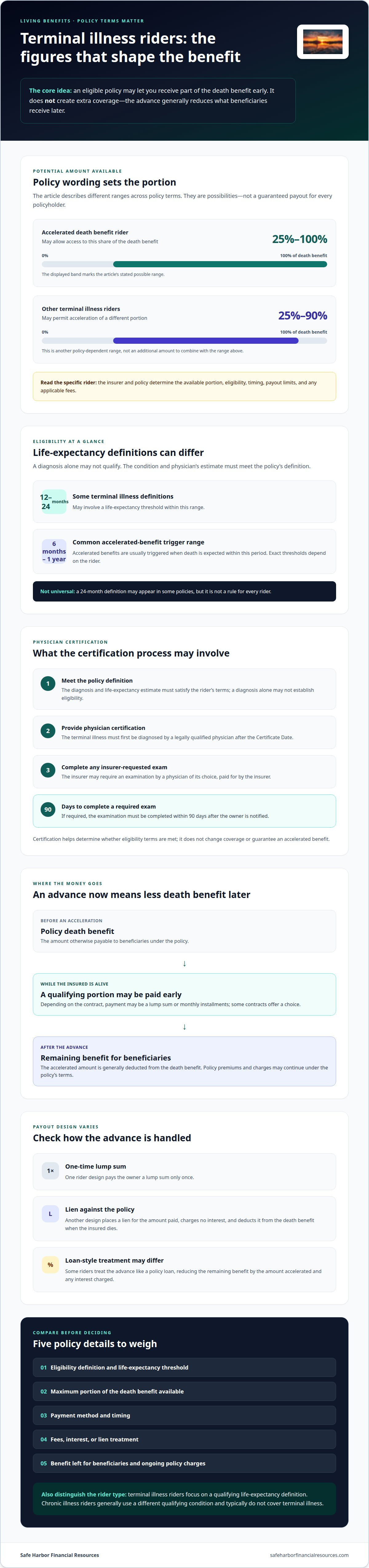
A life-expectancy threshold is the period within which a physician must expect the insured to die for the rider to qualify. Some terminal illness definitions may involve a life expectancy of 12-24 months, while accelerated benefits are usually triggered when death is expected within six months to one year. These ranges reflect differences in policy terms. The threshold in the specific rider determines whether a projected life expectancy qualifies for a payout.
Qualifying Diagnoses and Physician Certification
A qualifying diagnosis must meet the policy’s definition and be certified by a physician. The terminal illness must be first diagnosed by a legally qualified physician after the Certificate Date. The insurer may also require an examination by a physician of its choice, paid for by the insurer. If required, that examination must be completed within 90 days after the date the owner is notified. These steps establish whether the insured meets the rider’s eligibility terms; they don’t change the coverage or guarantee an accelerated benefit.
Comparing terminal illness riders
To understand what a terminal illness rider is, compare the policy terms that determine eligibility and payout, not just whether a life insurance policy includes a death benefit rider. Some accelerated death benefit riders are included without an additional premium, while adding one to an existing policy may increase the premium. Even an included rider can reduce the benefit left for beneficiaries.
Policy limits, waiting periods, and eligibility rules vary by insurer and state. State insurance departments have approved the sale of some form of accelerated benefits, while each rider’s provisions set qualifying conditions, timing, and payout limits. A diagnosis must meet those provisions, and physician certification supports the determination.
Payment structure matters, too. Depending on the policy, accelerated benefits may be paid as a lump sum or in monthly installments, and some contracts offer a choice. One rider design pays the owner a lump sum only once. Another places a lien for the amount paid, charges no interest, then deducts it from the death benefit when the insured dies.
Knowing what a terminal illness rider can provide also means distinguishing it from chronic illness living benefits. Terminal illness riders focus on a qualifying life-expectancy definition; chronic illness riders generally use a different qualifying condition and typically don’t cover terminal illness. A 24-month life-expectancy definition may appear in some policies, but it isn’t universal. Compare eligibility, the maximum portion available, payment method, fees, and the benefit remaining for beneficiaries. For help understanding life insurance living benefits, consider how each policy’s terms fit your priorities.
State approval affects which forms of accelerated benefits may be sold, while each policy sets its qualifying conditions, timing, and payout limits. A 24-month life-expectancy threshold is one possible definition, not a universal rule.
How much of the death benefit can be accessed through a terminal illness rider?
The available portion depends on the insurer and policy. An accelerated death benefit rider may allow access to 25% to 100% of the death benefit while the insured is alive. Other terminal illness riders may permit acceleration of 25%-90%. These ranges describe different policy terms, not a guaranteed payout for every policyholder.
This example illustrates why it is important to understand the amount advanced separately from the policy’s remaining values.
The accelerated benefit is deducted from the death benefit, so beneficiaries generally receive only the amount remaining after the insured dies. Some riders treat the advance like a policy loan, reducing the remaining benefit by the amount accelerated and any interest charged. After payment, the policy may remain in force, with premiums and charges continuing under its terms. Keeping payments current matters for preserving the remaining life insurance benefit.
Before requesting a payout, consider how much cash is needed now alongside the benefit intended for beneficiaries. A larger acceleration can provide more funds for current expenses, but leaves less death benefit. Explore life insurance options with living benefits to understand how coverage can support both needs.
Safe Harbor Financial Resources: Term Life Insurance
Safe Harbor Financial Resources helps Palm Beach Gardens residents explore Term Life Insurance and Life Insurance with Living Benefits when weighing protection for loved ones against access to benefits during their lifetime. A terminal illness rider’s eligibility rules, available payout, and effect on the remaining death benefit can help determine whether the coverage fits your priorities.
Discussing your needs can clarify how term coverage and living benefits relate to your financial plans. Consider what protection you want beneficiaries to retain and how an accelerated benefit could support expenses if you qualify. These details call for a careful, personalized conversation, since rider terms vary by policy.
Contact Safe Harbor Financial Resources to discuss your life insurance needs.
Make your next coverage decision with clarity
Understanding what a terminal illness rider could mean for your plans is one part of a broader decision: balancing present needs with the protection you want to leave behind. Before choosing a direction, consider which financial priorities matter most to you and your loved ones. This can help focus a conversation on coverage that fits your goals, rather than on a single policy feature.
Policy language can be difficult to interpret alone. A thoughtful review can help connect rider provisions with your broader insurance needs and clarify the questions that matter to your household. If you’re ready to discuss your options, contact Safe Harbor Financial Resources. A clear next step can make planning feel more manageable.
Frequently Asked Questions
What Is a Life Insurance Rider?
A life insurance rider adds a feature or benefit to a policy’s base coverage. For example, a terminal illness rider may let an eligible policy owner access part of the death benefit during the insured’s lifetime. Riders have their own terms, so the same diagnosis or request may be treated differently under different policies.
Which Policies Come With a Terminal Illness Rider Benefit?
Accelerated benefits are commonly attached to universal or other permanent life insurance policies, and may also be offered with individual or group term and group permanent life insurance. A rider may be included when a policy is purchased, or added to an existing policy. The policy contract identifies whether the benefit applies.
Does the certification have to come from a specialist?
Certification must come from a physician who meets the policy’s requirements; the terms don’t establish a general specialist requirement. A policy may allow the insurer to require an examination by a physician it chooses, with the insurer paying for it. For example, a primary-care physician’s certification may be relevant if it satisfies the rider’s definition and documentation rules.
What Happens if I Am Diagnosed With a Terminal Illness and Then Die From Illness?
If an accelerated benefit was paid before death, that amount is deducted from the life insurance death benefit. Beneficiaries receive the remaining benefit under the policy, provided required premiums and charges have been maintained. For example, if the owner receives only part of the available benefit, the unpaid portion remains payable according to the policy’s terms.
What documents are needed for a terminal illness claim?
A claim generally requires the owner’s written request, the insured’s written authorization to release medical records, and written consent from any assignee and irrevocable beneficiary. The insurer may also require medical evidence supporting the qualifying diagnosis and life-expectancy criteria. Palm Beach Gardens residents reviewing life insurance coverage can discuss these requirements with Safe Harbor Financial Resources. Contact the agency to arrange a free Medicare consultation or discuss insurance needs.



Comments