


Using Life Insurance for Long-Term Care Costs and Eligibility
Life insurance may help pay for long-term care while you’re alive, but access isn’t automatic. Using life insurance to pay for long-term care may involve a policy rider or living benefit, and eligibility often depends on how much help you need with everyday activities. Many long-term care riders use inability to perform two of six activities of daily living as a benefit trigger.
It’s understandable to want a clear picture before relying on a policy to help protect your care options and the benefit left for loved ones. This article explains how life insurance benefits may work, how daily living needs can affect eligibility, and how to assess whether this approach fits your plans.
Should you use life insurance to help pay for long-term care?
Using life insurance to pay for long-term care can provide funds while you’re alive, but the method affects your coverage and beneficiaries. The right option depends on your policy’s terms and the care you need.
Accessing Accelerated Death Benefits
An accelerated death benefit lets an eligible policyholder access some of the death benefit before death. It may apply when a doctor certifies terminal illness with life expectancy of 12 months or less; some policies also cover chronic illness or qualifying care needs. The payout may be capped at 50% of the death benefit, though some policies permit access to the full amount.
Using Riders for Care Benefits
A long-term care rider directs part of a life insurance death benefit toward eligible care expenses. Riders may provide monthly benefits or a lump sum, and some require you to pay care costs before reimbursement. They’re usually attached to permanent whole life or universal life policies, rather than term coverage. Using life insurance to pay for long-term care through a rider can reduce the funds left for beneficiaries.
Converting or Linking Life Coverage
Conversion uses an existing policy to establish a long-term care benefit plan, while linked-benefit coverage combines life insurance and care benefits in one policy. Unlike standalone long-term care insurance, these options connect care funding with life coverage. A life settlement sells a policy to a buyer for a lump sum; a viatical settlement is for a terminally ill policyholder with a life expectancy of two years or less.
Changes to the Death Benefit
Using benefits for care generally leaves less for beneficiaries. Loans or withdrawals from permanent policy cash value can also reduce the death benefit, and an unpaid loan may have tax consequences. Surrendering or selling a policy can end its future death benefit. Compare these trade-offs with your care needs and other resources before deciding which option fits.
Activities of daily living eligibility requirements
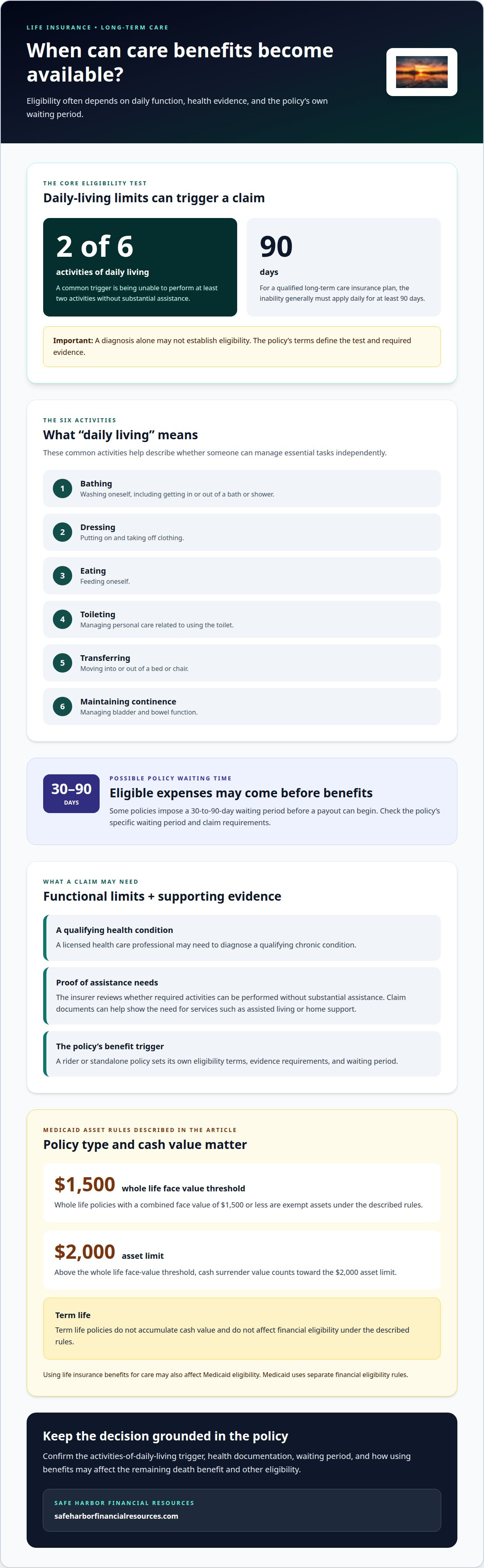
A benefit claim usually requires evidence of a qualifying health condition and functional limitations. The policy’s terms set its eligibility test and waiting period before a payout can begin.
Daily needs matter because a diagnosis alone may not establish eligibility.
Meeting Activities-of-Daily-Living Criteria
Activities-of-daily-living criteria measure whether someone can manage essential tasks independently. Common examples include bathing, dressing, eating, toileting, transferring, and maintaining continence. Under a qualified long-term care insurance plan, a person may qualify as chronically ill if they cannot perform at least two activities of daily living without substantial assistance daily for at least 90 days, according to the Internal Revenue Service. The Internal Revenue Service also says an individual may qualify as chronically ill if loss of functional capacity leaves them unable to perform at least two activities of daily living daily for at least 90 days without substantial assistance.
Health Considerations for Eligibility
Health evidence connects functional limits to the benefit trigger. A licensed health care professional may need to diagnose a qualifying chronic condition, while the insurance company reviews whether the person can perform required activities without substantial assistance. Claim documents help show the need for care services, such as assisted living or home support. Some policies also impose a 30-to-90-day waiting time, so eligible expenses may arise before a payout starts.
Medicaid uses separate financial eligibility rules. Whole life policies with a combined face value of $1,500 or less are exempt assets under the described rules; above that amount, cash surrender value counts toward the $2,000 asset limit. Term life policies don’t accumulate cash value and don’t affect financial eligibility. Using life insurance benefits for care may also affect Medicaid eligibility. Some long-term care insurance premiums may be deductible as medical expenses, depending on the taxpayer’s circumstances.
For a clearer view of how life insurance with living benefits may fit care planning, consider the policy’s eligibility terms alongside your care needs.
Long-term care services and activities of daily living
Long-term care helps with ongoing personal needs, not only treatment for a medical condition. Coverage may support care at home, adult day health settings, assisted living, or a nursing home. Activities of daily living help describe the assistance someone needs, while the care setting determines where that support is delivered.
The six activities commonly used in long-term care coverage relate directly to everyday support. For example, difficulty bathing or dressing may mean someone needs hands-on help at home, while difficulty transferring may affect whether a facility can safely support them. A long-term care rider or standalone policy uses its own benefit trigger to determine whether those needs qualify.
Care costs vary by service. These figures show why the monthly benefit, setting, and length of coverage matter together.
Medicare generally doesn’t cover long-term care, apart from short-term skilled nursing facility stays after hospitalization. That distinction can leave ongoing help with daily living needs to other coverage or personal resources. An advisor can help explain how a policy’s activities-of-daily-living trigger relates to the services it covers. Review life insurance options with living benefits as part of planning for care needs.
Safe Harbor Financial Resources: Term Life Insurance
Safe Harbor Financial Resources can help you consider how life insurance fits alongside long-term care planning. Term Life Insurance is one option to explore for life coverage, while Life Insurance with Living Benefits may be relevant when considering access to benefits during your lifetime. These are distinct policy features, so the policy terms matter.
Long-term care riders are usually associated with permanent whole life or universal life policies rather than term coverage. If you’re weighing care needs against support for beneficiaries, understanding that distinction can help frame a conversation about coverage options. Medicare Supplement Insurance (Medigap) addresses a different need: Medicare-related health coverage, not long-term care benefits.
Contact Safe Harbor Financial Resources to discuss how life insurance options relate to your planning needs.
Make Your Next Care-Planning Decision with Confidence
Using life insurance to pay for long-term care is also a decision about the support you want and the financial legacy you hope to preserve. Consider how care planning fits alongside your other priorities, including protection for loved ones and Medicare-related coverage. Keeping those goals in view can help you approach the next conversation with greater clarity.
Safe Harbor Financial Resources offers Term Life Insurance, Life Insurance with Living Benefits, and Medicare Supplement Insurance (Medigap). Each addresses a different planning need. The next step is to discuss which questions matter most in your situation.
Contact Safe Harbor Financial Resources to talk through your life insurance and care-planning priorities. A thoughtful conversation can help you move forward with a steadier sense of direction.
Frequently Asked Questions
How much does long-term care cost, and how much coverage do I need?
A U.S. semi-private nursing-home room averages $6,844 per month. The coverage to plan for depends on the care setting, the amount you could contribute from savings, and how long you want benefits to last. For example, planning for in-home assistance calls for a different benefit structure than planning for facility care. Compare the policy’s benefit limit with your preferred care arrangement.
How do I qualify for a long-term care rider?
You qualify for benefits when your situation meets the rider’s claim criteria and the insurer receives supporting documentation. A care assessment can describe functional limitations, the help needed, and any qualifying chronic condition. The policy also defines covered care settings and its waiting period. A diagnosis alone may not establish eligibility, so the claim must show how your care needs fit the contract.
How are premium payments determined?
Premium payments reflect the life insurance policy’s design and the rider benefits selected. Factors include the amount of life coverage, the care benefit, and the premium payment structure. A larger potential payout or broader benefit design can affect ongoing premiums. The policy illustration shows how the rider changes payments, helping you understand the commitment alongside the coverage it may provide.
What is a long-term care benefit plan?
A long-term care benefit plan uses life insurance value to provide funds for eligible care. The plan may set a monthly payout and a defined benefit period, while its terms explain which services qualify and how any remaining value is handled. This structure gives policyholders a way to direct existing coverage toward care needs rather than leaving the policy unchanged for beneficiaries.
What are the major reasons a person requires long-term care?
People may need long-term care when health or functional changes make routine self-care difficult. Examples include reduced mobility after illness, cognitive changes that affect safe daily routines, or a chronic condition that limits independence. Support might mean hands-on help at home or supervision in assisted living. The type and amount of assistance depend on a person’s needs, not a diagnosis alone.



Comments