


No Medical Exam Life Insurance in Florida: Compare Term Costs
Skipping a medical exam doesn’t necessarily mean skipping health questions. The trade-off is that no-exam coverage may cost more than fully underwritten term insurance for the same benefit amount.
It’s reasonable to want a straightforward application and a clear picture of premiums before choosing coverage. But the lowest-cost option depends on more than avoiding an exam: your health profile and the underwriting process can affect what you pay.
This guide explains how no-exam term policies work, what can affect their cost compared with exam-based coverage, and what to consider when choosing a term length and coverage amount.
What Is No Medical Exam Term Life Insurance?
No-exam term life insurance removes the physical exam, but not necessarily health screening. In Florida, it can provide temporary protection through a death benefit if the insured dies during the policy term.
Coverage Amounts and Term Lengths
No-exam term coverage combines a chosen benefit amount with a set policy duration. The right amount and term should reflect how long financial responsibilities need protection, such as replacing income while children depend on a parent. Choosing these together helps match the benefit to the need.
First-Day Coverage and Waiting Periods
First-day coverage means the policy benefit can apply once coverage is in force. Applying without an exam doesn’t determine when protection starts; the policy’s effective date does. Term life pays beneficiaries if the insured dies during the term. Guaranteed-issue coverage is different: it usually has a graded death benefit during the first two years, so the policy type matters.
Coverage Limits and Eligibility
No-exam coverage limits vary by policy, and simplified-issue options often cap the amount available. These are different product pathways, not a promise that every applicant qualifies for a higher amount. No-exam coverage may suit someone who wants to avoid a physical exam; a healthy applicant willing to take one may find fully underwritten term coverage costs less for the same amount.
Health Questions and Prescription Checks
No-exam insurers may still ask about health history, conditions, and medications. They may also review prescription and medical-record databases, including MIB and pharmacy data, as well as motor vehicle records. These checks help assess risk without a physical exam or blood draw. The trade-offs include health screening, possible coverage caps, and potentially higher premiums than exam-based coverage. No-exam doesn’t mean no underwriting or automatic approval.
Premium differences versus fully underwritten policies
Premiums reflect both the coverage amount and how the insurer evaluates health. Comparing underwriting paths helps you decide whether avoiding an exam is worth the potential cost difference.
Comparing Premiums Across Policies
For a healthy applicant who isn’t in a rush, fully underwritten term insurance is usually cheaper than no-exam coverage for the same benefit amount. The exam and health review give the insurer more information to assess risk. No-exam policies may cost more because the insurer accepts additional uncertainty. An applicant who qualifies for preferred pricing may therefore favor an exam-based policy, while convenience may matter more to someone who wants to avoid the exam.
Customization can also affect premiums. Riders add policy provisions, but their availability and cost depend on the policy. A no-exam label describes the underwriting process, not whether a policy builds cash value. For a child, distinguish temporary term protection from a permanent policy intended to accumulate cash value. Professional term life guidance can help frame those trade-offs.
Simplified-Issue and Guaranteed-Issue Policies
In Florida, simplified-issue coverage skips the medical exam but generally requires a short health questionnaire. Guaranteed-issue coverage requires neither an exam nor a health questionnaire, but offers limited coverage and may help with final expenses. It usually has a graded death benefit during the first two years, which can limit the benefit payable for an early death.
That difference matters: simplified issue can involve health-based underwriting, while guaranteed issue removes those screening questions. Compare the approval process, purpose of the benefit, and any graded period before deciding which structure fits.
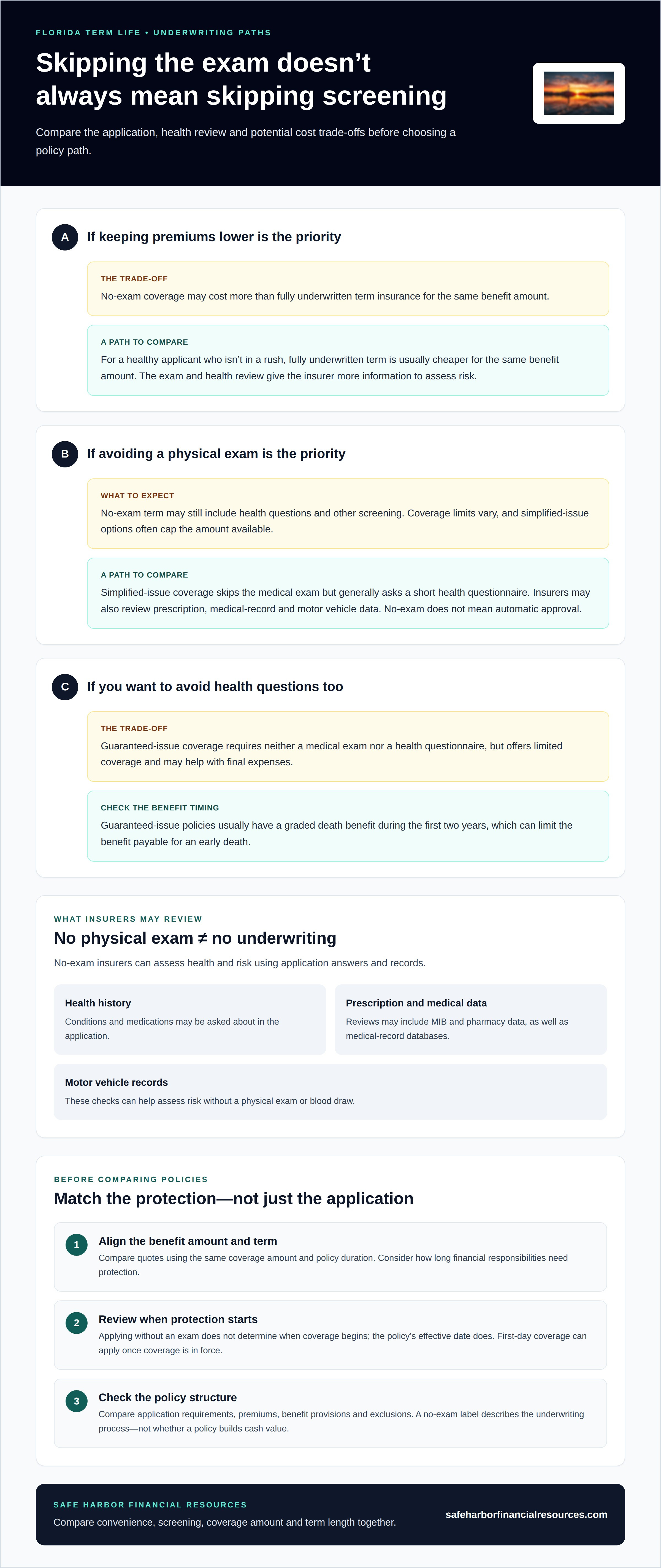
No-exam term life insurance in Florida
No medical exam life insurance in Florida can follow different underwriting paths; skipping a physical doesn’t always mean skipping health screening. Comparing policy type, application requirements, and contract terms helps clarify which option fits your needs.
Available No-Exam Policy Types
Florida options include simplified-issue and accelerated-underwriting term policies, guaranteed-issue coverage, final expense policies, and some group life plans. Simplified-issue applications generally ask health questions, while guaranteed-issue policies require neither a medical exam nor a health questionnaire. Final expense coverage may still involve health questions, and group plans may require screening for additional coverage. These distinctions matter because no-exam coverage isn’t automatically guaranteed or equivalent to term protection.
For residents comparing no medical exam life insurance in Florida, the policy’s purpose matters as much as the application method. For example, term coverage protects for a chosen period, while guaranteed-issue coverage may be designed to help with final expenses.
Comparing Quotes and Applying
A professional comparison aligns the coverage amount and term across quotes, then weighs application requirements and premiums. Applications may ask about health conditions and prescriptions; insurers may also review medical-record and motor vehicle data. Compare the policy’s effective date, benefit provisions, and exclusions before applying. Florida buyers can also review the policy contract and disclosures to understand how coverage works and what limitations apply. Compare Florida term life options with professional guidance.
Insurers Offering No-Exam Coverage
No-exam products differ by policy type and underwriting approach. Compare the terms of the specific term, guaranteed-issue, or final expense policy you’re considering. A no-exam application may still involve health questions and prescription checks. No medical exam life insurance in Florida can therefore differ in eligibility, benefit design, and application review, even when policies share a no-exam label.
Safe Harbor Financial Resources
Safe Harbor Financial Resources helps Florida residents make sense of life insurance choices, including how no-exam term coverage fits their protection needs. If you’re weighing application convenience against coverage amount, term length, or health screening, professional guidance can help clarify the trade-offs without losing sight of your priorities.
Its life insurance options include Term Life Insurance, Whole Life Insurance, and Life Insurance with Living Benefits. Start with the protection you want and your questions about premiums, underwriting, or policy structure. Contact Safe Harbor Financial Resources to discuss your life insurance needs.
Choose a path that fits your protection needs
A decision about no medical exam life insurance in Florida should reflect more than a preference to skip a physical. Consider how the policy fits your financial responsibilities, how much screening you’re comfortable with, and whether the coverage structure suits the people you want to protect. Understanding these priorities can make the next conversation more focused and help you weigh convenience against the policy details that matter to you.
For guidance tailored to your situation, contact Safe Harbor Financial Resources. You can discuss your goals and explore the life insurance options that may fit them. Take the next step at your own pace, with a clearer sense of what you want your coverage to do.
Frequently Asked Questions
How much coverage can I get without an exam?
Those limits reflect different policy paths, not a guaranteed amount for every applicant. For example, someone seeking a larger benefit should compare available underwriting options with their household’s needs, rather than assuming every no-exam policy has the same ceiling.
How fast can I get approved without an exam?
Simplified-issue approval can take from a few days to two weeks, while traditional fully underwritten applications may take 2-4 weeks. Timing depends on the underwriting route and how the insurer evaluates the application and available health information.
What term lengths are available?
Florida no-exam term policies are typically available for 10, 15, 20, or 30 years. A shorter term may suit a temporary obligation, such as covering a loan, while a longer term may better match the years a family depends on an income. Compare the end date with the financial responsibility the policy is meant to protect.
Who Is It Best For?
No-exam term insurance can suit people who prefer to avoid a physical exam or want an application process that may move faster than traditional underwriting. It can also appeal to someone with a financial need for a defined period, such as income protection while dependents rely on them. The application may still involve health questions and records review.
Who benefits most?
People with controlled high blood pressure or diabetes may find that some simplified-issue policies consider their applications. No-exam options can also suit applicants who value avoiding a physical exam, but they should weigh the benefit amount and policy terms against their needs. A Palm Beach Gardens resident can compare the available paths based on their household’s protection priorities.



Comments