


Medigap Plan G in Florida: Coverage, Drug Benefits and Costs
A Medigap policy can help pay Medicare costs, but it does not cover prescription drugs. Medigap Plan G in Florida covers Medicare-approved Part A and Part B cost-sharing, except the Part B deductible. Prescription coverage generally comes through a separate Medicare Part D plan.
It’s understandable to want a clear picture of what your coverage will and won’t pay for. This guide explains Plan G’s benefits, how prescription coverage fits in, and what affects premiums, so you can compare your options with confidence.
You’ll also learn what to consider when comparing insurers that offer Medigap plans in Florida. With the key details in view, you can decide whether Plan G fits your health coverage needs and what to consider next.
What Is Medicare Supplement (Medigap) Insurance?
Medigap helps pay certain expenses that Original Medicare leaves to you, including deductibles and coinsurance. In Florida, compare standardized benefits separately from premiums, because the same plan letter can have different prices from different insurers.
For a brief overview of Plan G’s benefits and exclusions, watch this video:
Florida Plan G Premiums and Pricing Factors
Plan G premiums are monthly payments for supplemental coverage, and the amount varies by insurer and applicant. Comparing quotes matters: a lower starting premium does not change Plan G’s standardized benefits, but it can affect your ongoing budget.
Florida pricing can depend on age, health status, location, and insurer. Compare Plan G and Plan N quotes for the same applicant, and review what each policy covers. Plan G helps pay Medicare-approved Part A and Part B cost-sharing, including hospice care coinsurance and foreign travel emergency benefits, but not the Part B deductible.
Enrollment Timing and Guaranteed-Issue Protections
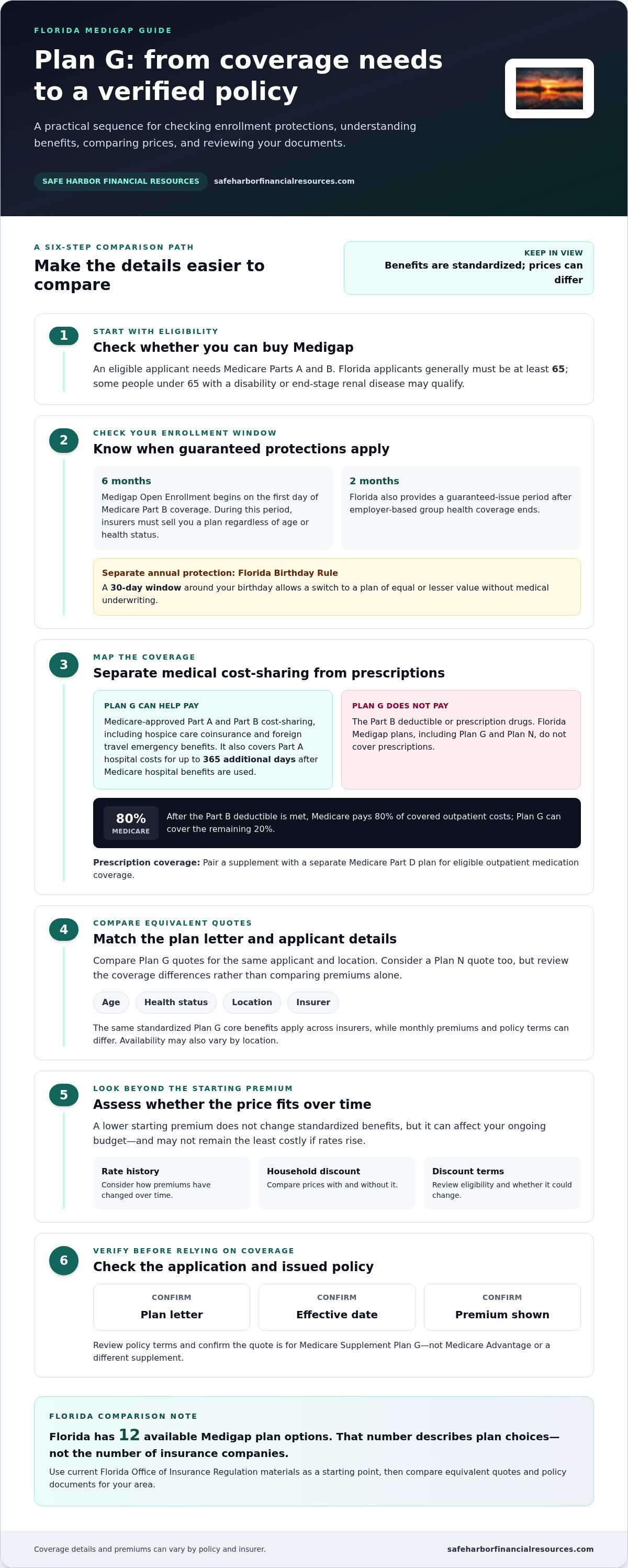
Florida Medigap enrollment rules determine when insurers must offer certain protections. According to the Florida Office of Insurance Regulation, applicants generally must be at least 65 to buy a policy, though some people under 65 with a disability or end-stage renal disease may qualify.
Your six-month Medigap Open Enrollment Period begins on the first day of Medicare Part B coverage. Enrolling then is often the clearest time to apply: insurers must sell you a plan regardless of age or health status. Florida also provides a two-month guaranteed-issue period after employer-based group health coverage ends.
Comparing and Verifying Plan G Policies
Compare insurers by matching Plan G benefits, monthly premiums, and policy terms. Then review the application and issued policy for accuracy. Before relying on the coverage, confirm the plan letter, effective date, and premium shown in your documents.
The lowest starting premium may not remain the least costly if rates rise over time. Consider the insurer’s rate history and compare premiums with and without a household discount. Review the discount’s eligibility terms and whether they could change. This helps distinguish a lower initial payment from a sustainable choice.
Are There Florida Medicare Supplement Plans with Prescription Drug Coverage?
No. Florida Medigap plans, including Plan G and Plan N, do not cover prescription drugs. Medicare beneficiaries who need outpatient medication coverage can pair a supplement with a separate Medicare Part D plan. Medigap helps with certain costs for Medicare-covered services, while Part D covers eligible prescriptions.
Most states offer ten standardized Medigap plan types, and each letter has a defined benefit structure across insurance companies. Plans C and F aren’t available to people newly eligible for Medicare on or after January 1, 2020. Plan G covers Medicare-approved Part A and Part B cost-sharing, except the Part B deductible. It also covers Part A hospital costs for up to 365 additional days after Medicare hospital benefits are used.
Plan G doesn’t pay the Part B deductible; after it’s met, Medicare pays 80% of covered outpatient costs, and Plan G can cover the remaining 20%. These amounts help explain how deductibles and coinsurance affect pocket costs.
Plan N offers a different cost-sharing balance.
Can Florida residents switch Medigap plans without medical underwriting? Yes. Florida’s 30-day Birthday Rule window around a policyholder’s birthday allows a switch to a plan of equal or lesser value without medical underwriting. This annual window can help eligible policyholders compare benefits and premiums while preserving that protection. Open enrollment provides a separate opportunity for people first eligible for Medicare.
Medigap insurers available in Florida
Florida residents can compare Medicare Supplement Insurance from companies offering policies in their area, but the plan letter alone doesn’t identify the insurer. Florida has 12 available Medigap plan options; that figure describes plan choices, not the number of insurance companies. The practical takeaway: compare the insurer and its Plan G premium for your location, then review the policy’s standardized benefits.
Florida’s Office of Insurance Regulation lists Medicare Supplement materials, including the OIR-B2-MSR-AllPlans spreadsheet. Use the insurer names and plan information in current state materials as a starting point, then compare quotes for the same plan letter. A Plan G from one company has the same standardized core benefits as Plan G from another, while premiums and policy terms can differ.
Check that each quote is for Medicare Supplement Plan G, not Medicare Advantage or a different supplement. Then compare the monthly premium, application terms, and any available household discount. Availability can vary by location, so a company offering Plan G in one Florida area may not offer it in another. An eligible applicant also needs Medicare Parts A and B to buy Medigap.
Standardized benefits can help with covered hospital and medical expenses, but they do not mean every service is paid in full. Plan G covers Medicare-approved cost-sharing subject to its benefits, while the member pays the Part B deductible. Nursing facility care and visits are covered only when they qualify as Medicare-covered services and under applicable plan terms. Review the exact policy before choosing.
For a sound comparison, identify companies offering Plan G where you live, then compare equivalent quotes and policy documents. This separates insurer pricing from coverage and helps you focus on a policy that fits your needs.
Safe Harbor Financial Resources: Medicare Supplement Insurance (Medigap)
Safe Harbor Financial Resources helps Florida residents understand Medicare Supplement Insurance (Medigap) and compare coverage choices. If you’re weighing Plan G against another supplement, guidance can help clarify how benefits and premiums fit your healthcare priorities.
Bring your questions about Medicare cost-sharing, enrollment timing, or how a separate Part D plan works alongside Medigap. A clear review can help you understand the trade-offs before choosing coverage. Safe Harbor Financial Resources also offers life insurance with living benefits, term life insurance, and whole life insurance for people considering broader protection.
For help understanding Medigap options, contact Safe Harbor Financial Resources.
Choose Coverage That Fits Your Next Chapter
Connect your coverage choice with the care and financial priorities you want to protect. As you consider Medigap Plan G in Florida, think about how predictable medical cost-sharing fits alongside your broader plans, rather than treating each insurance decision in isolation.
Safe Harbor Financial Resources offers Medicare Supplement Insurance (Medigap), Life Insurance with Living Benefits, and Term Life Insurance. If you want help considering these options in light of your needs, contact Safe Harbor Financial Resources. A thoughtful conversation can help bring your questions into focus and make your next decision feel more manageable.
Frequently Asked Questions
What Do Medigap Plans Cost in Florida?
That broad spread reflects differences in insurer, location, age, and health rating, so a statewide range cannot predict a Palm Beach Gardens quote. Compare premiums for the same plan letter and applicant profile, and weigh the ongoing payment against your budget.
Who Should Choose Plan G in Florida?
Plan G may suit someone who values predictable cost-sharing for Medicare-covered services and accepts paying the Part B deductible. It can also suit people who want protection from Part B excess charges, which Plan N does not cover. Before choosing, consider how often you use care, your comfort with out-of-pocket expenses, and the premium difference.
Does Medigap cover prescription drugs?
No. Medigap does not pay for outpatient prescription drugs, so someone taking regular medications should consider how a separate Part D plan fits their coverage. Compare a Part D plan’s formulary and pharmacy terms with your current prescriptions. Medigap and Part D address different costs, so one policy does not replace the other.
Is Part G the same as Medigap?
No. “Part G” is not a Medicare part; Plan G is a Medigap plan letter. Medicare Parts A and B provide Original Medicare coverage, while a Plan G policy supplements certain cost-sharing. For Medigap Plan G in Florida, the letter identifies standardized benefits, while the insurance company sets the premium.
The Math: When Does Plan G Save You Money Over Plan N?
Plan G can save money when its higher premium is less than the copayments and other costs Plan N may leave you to pay.



Comments