


Does Medicare Cover Dental Implants in Florida? See What’s Covered
For most people asking, “Does Medicare cover dental implants in Florida?” the answer is no: Original Medicare generally doesn’t cover implants, dentures, or routine dental care. It may cover certain dental services when they’re directly tied to specific covered medical treatment, but that’s a limited exception. Knowing the difference can help you plan without mistaking medical coverage for dental coverage.
It’s understandable to expect Medicare to help with care that affects your health and daily comfort. This article explains how Original Medicare treats implants, dentures, and routine dental services, and where some Medicare Advantage plans may offer additional dental benefits. You’ll see what these coverage distinctions mean as you compare Medicare options in Florida.
Does Medicare cover dental implants?
Original Medicare generally doesn’t cover dental implants, but some Medicare Advantage plans may. Coverage depends on the plan’s dental benefits, limits, and rules.
This video explains the difference between Original Medicare and Medicare Advantage dental benefits:
Medicare Advantage Dental Benefits
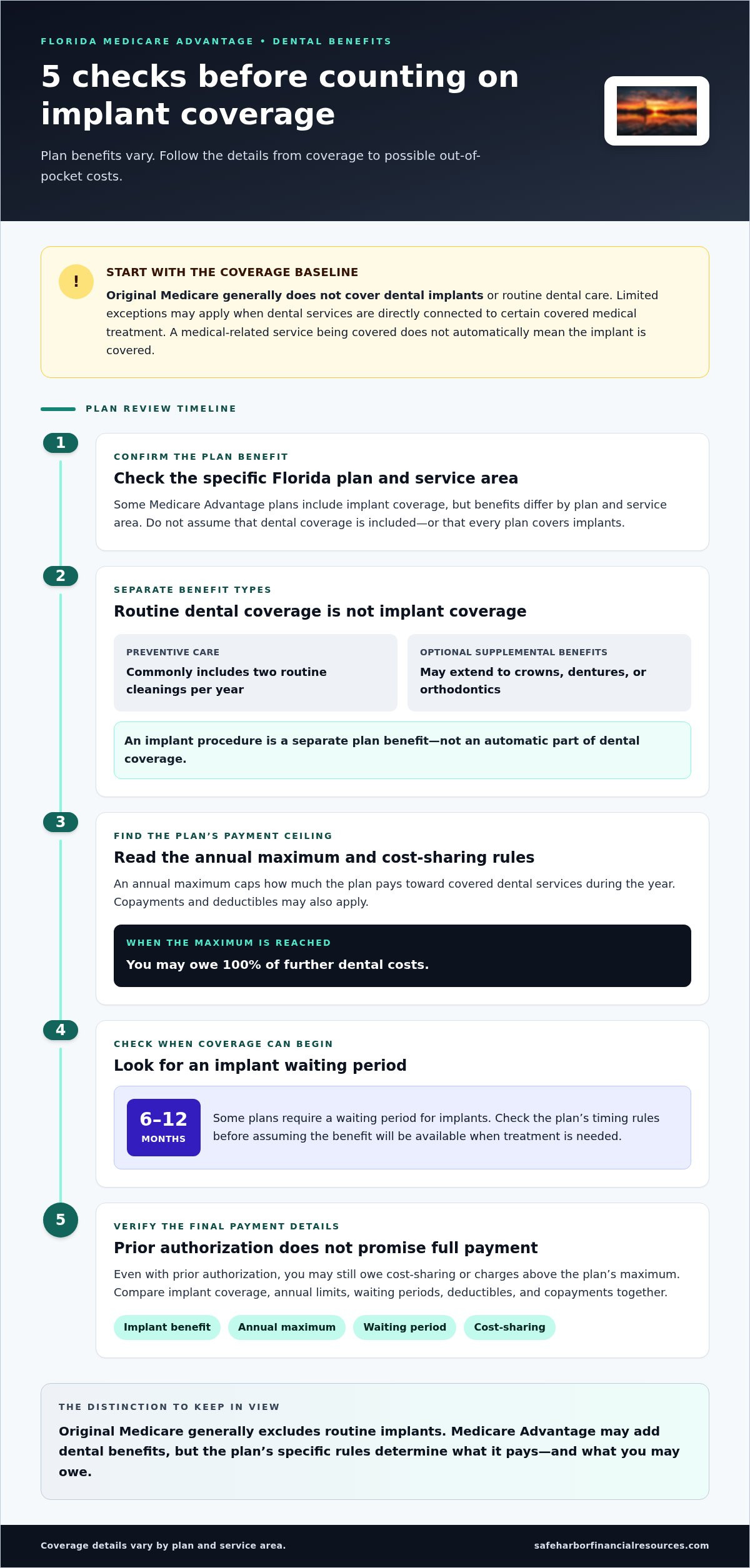
Medicare Advantage plans are private Medicare plans that may include dental coverage beyond Original Medicare. This matters because one plan may cover routine care, while another may include more extensive services. Preventive benefits commonly include two routine cleanings per year. Optional supplemental benefits may extend to crowns, dentures, or orthodontics. Coverage for an implant procedure is a separate plan benefit, not an automatic part of dental coverage.
Implant Limitations and Cost Caps
An annual maximum limits how much a plan pays toward covered dental services during a year. Copayments and deductibles may also apply. Some plans require a 6-12-month waiting period for implants. Once the maximum is reached, you may owe 100% of further dental costs.
Florida Plan Options and Implant Costs
Which Florida Medicare Advantage plans offer dental implant benefits? Some plans include implant coverage, but benefits vary by plan and service area. Compare each plan’s dental details, including implant coverage, annual maximums, and waiting periods. Prior authorization doesn’t guarantee full payment: you may still owe cost-sharing or charges above the plan’s maximum.
How much do dental implants cost in Florida without insurance? A 2026 U.S. national average study indicates that costs can vary significantly by provider and region. The total amount depends on the specific treatment involved, and the crown attached to an implant may be an additional cost.
Original Medicare coverage for dental implants
Original Medicare generally excludes routine dental care, including implants, dentures, cleanings, and extractions. Limited exceptions apply when dental services are directly connected to certain covered medical treatment.
Dental Services Under Original Medicare
Original Medicare may cover dental services when they’re needed for a covered medical treatment, rather than routine oral care. That distinction matters because an implant to replace a missing tooth usually isn’t covered simply because it improves chewing or appearance. For covered Part B oral surgery, you typically pay 20% of the Medicare-approved cost after meeting the Part B deductible.
Coverage Exclusions and Exceptions
Medicare may cover an extraction to treat a mouth infection before chemotherapy, or an oral exam and dental treatment before a heart valve replacement or transplant. It may also cover dental services during an inpatient hospital stay when a condition or procedure requires hospitalization. Coverage for dental procedures may depend on whether they’re related to a covered medical treatment. These exceptions concern related treatment, not automatic coverage of the implant itself.
For routine dental care, people with Original Medicare may consider a separate dental insurance plan. Private dental plans commonly cover major restorative work at 50%, subject to an annual maximum often ranging from $1,000 to $2,500. New plans commonly impose 12-24-month waiting periods for major procedures, and plan rules may limit which dentists receive full benefits.
Medigap helps with certain costs related to Original Medicare, but it doesn’t make excluded routine dental care a covered Medicare service. Before planning treatment, distinguish covered medical services from dental charges, such as an implant or crown. This helps clarify what Medicare may pay and what you could owe out of pocket.
Medicare coverage for routine dental care, dentures, and implants
Original Medicare generally excludes routine dental care, including cleanings, fillings, dentures, and implants. When planning treatment, the key distinction is whether the dental work is routine or directly connected to a covered medical service.
A dental consultation may include an exam, imaging, and a proposed treatment plan. These steps don’t make routine dental care a Medicare benefit. For example, a filling for ordinary tooth decay is generally outside Original Medicare coverage. A Medicare Advantage plan may add dental benefits, but covered services and limits depend on the plan.
Dentures are also generally excluded under Original Medicare. The same applies to a single dental implant: patients generally pay 100% of its cost unless the procedure is considered medically necessary. That exception is narrow. Medicare may cover related dental services when they’re needed for certain covered medical treatments, such as addressing an infection before cancer treatment. Coverage of that medical-related service doesn’t automatically mean Medicare pays for an implant.
A discount program or separate dental plan is distinct from Medicare coverage, so compare its terms with the care you expect to need. For a Medicare Advantage plan, check whether dental benefits cover preventive care, fillings, dentures, or implants, and note any annual maximum, deductible, or waiting period. These details affect how much of your treatment plan the plan may pay.
For help understanding how Medicare Advantage fits your coverage choices, explore Medicare Advantage plan guidance.
Safe Harbor Financial Resources: Medicare Supplement Insurance (Medigap)
Safe Harbor Financial Resources can help you understand how Medicare Supplement Insurance (Medigap) fits alongside your Medicare coverage choices. Medigap and dental insurance serve different purposes: a supplement works with Original Medicare, while dental coverage may come through a separate dental policy or a Medicare Advantage plan. A Medigap policy doesn’t cover dental implants excluded by Original Medicare.
When comparing coverage, separate medical costs Medicare may cover from routine dental costs, such as an implant or denture. Then consider whether your priority is managing Original Medicare cost-sharing or finding dental benefits through another plan type. Safe Harbor Financial Resources also offers life insurance options, including Life Insurance with Living Benefits, Term Life Insurance, and Whole Life Insurance, for those considering broader financial protection. Contact Safe Harbor Financial Resources to discuss your Medicare coverage choices.
Choose your next coverage step with clarity
Understanding whether Medicare covers dental implants in Florida can help you separate dental planning from broader decisions about financial security. Consider what you want your healthcare coverage to do, which expenses you’re preparing for, and whether your family’s protection needs also deserve attention. Clear priorities can make coverage discussions more focused and useful.
Safe Harbor Financial Resources offers Medicare Supplement Insurance (Medigap), Life Insurance with Living Benefits, and Term Life Insurance. These options address different needs, so the right conversation can start with the one that matters most to you. For guidance on your coverage choices, contact Safe Harbor Financial Resources. Take the next step at a pace that feels right, with a steadier path toward informed decisions.
Frequently Asked Questions
How Can I Manage Out-of-pocket Expenses?
Plan for services Medicare or your dental plan doesn’t pay for. Ask for a written treatment plan that separates implant surgery, abutment, and crown charges, then compare those items with your coverage limits. Since coverage options work differently, review their terms carefully.
Does Original Medicare cover dental implants?
Original Medicare generally doesn’t cover implants, even when replacing a missing tooth matters for comfortable eating. The answer to whether Medicare covers dental implants in Florida is usually no under Original Medicare. The exception concerns dental services connected to specific covered medical treatment, not routine tooth replacement. For example, treating an infection before cancer treatment may qualify as related care, while the implant itself remains a separate dental expense.
What dental implant procedures does Medicare Part A or Part B cover?
Part A may cover dental procedures required for surgery during a covered hospital stay. Part B may cover certain medically necessary oral surgery, but that doesn’t mean it covers implant placement. For covered Part B services, you generally pay 20% of the Medicare-approved amount after meeting the Part B deductible. A procedure’s connection to covered medical treatment is central to whether Medicare pays.
Do Medicare Advantage plans in Florida cover dental implants?
Some Medicare Advantage plans in Florida offer implant benefits, while others limit dental coverage to services such as cleanings and X-rays. Benefits depend on the individual plan, not simply on its Medicare Advantage name. For Florida residents considering an implant, relevant details include covered services, network rules, cost-sharing, and the plan’s annual dental limit.
What are the limits, waiting periods, and annual maximums for implant coverage?
Some Florida Medicare Advantage plans covering implants have annual dental maximums of $1,000 to $3,000, and waiting periods can be 6-12 months. Copayments or deductibles may also apply. A $2,000 annual maximum means the plan pays no more than $2,000 during that year; it doesn’t promise that every implant charge qualifies. After the maximum is reached, further dental costs may be your responsibility.



Comments