


Medigap Enrollment After Losing Employer Coverage 2026
What if your Medicare deadlines start on different dates, even though both are tied to losing employer coverage? The Medigap enrollment period after losing employer coverage is not the same as the Medicare Part B Special Enrollment Period. Confusing the two can put important rights at risk. The timelines are easier to manage once you identify what starts each one.
This guide explains how the 63-day Medigap guaranteed-issue window differs from the Part B enrollment period, why COBRA doesn’t necessarily pause Medicare deadlines, and which coverage records to keep. You’ll also learn what to consider if you haven’t enrolled in Part B yet. Palm Beach County residents can review their next steps in a free Medicare consultation with licensed specialist Dennis Richards.
Medigap enrollment after employer coverage ends: two different deadlines
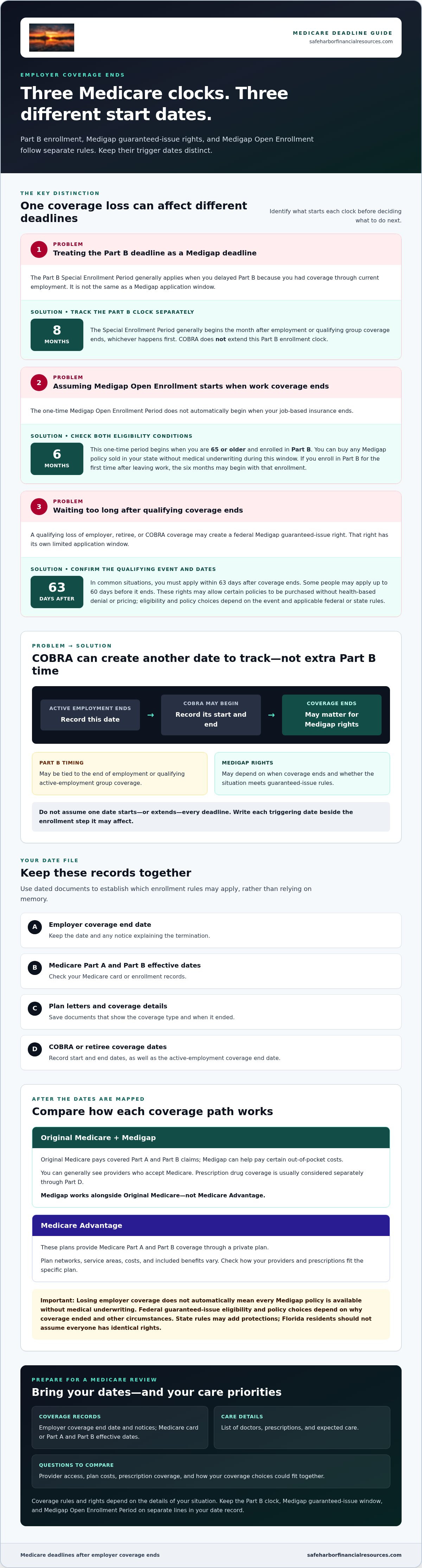
Part B enrollment and Medigap guaranteed-issue rights follow separate rules. If you delayed Part B because you had coverage through active employment, you generally have an eight-month Special Enrollment Period. It begins the month after employment or group coverage ends, whichever comes first. This is not the same as a Medigap application deadline.
The Medigap Open Enrollment Period is a one-time, six-month period. It begins when you’re both 65 or older and enrolled in Part B, not simply when your job-based insurance ends. During this window, you can buy any Medigap policy sold in your state without medical underwriting. Because Part B is required to buy Medigap, if you enroll in Part B for the first time after leaving work, your six-month period may begin with that enrollment.
Medigap helps cover certain out-of-pocket costs under Original Medicare. For a general overview of how Medigap works, see this background reference.
What happens to Medigap rights when job-based coverage ends?
Losing qualifying employer, retiree, or COBRA coverage may give you a federal guaranteed-issue right. In common situations, you must apply within 63 days after the coverage ends. Some people can apply up to 60 days before it ends. These protections can let you buy certain Medigap policies without health-based denial or pricing.
Guaranteed-issue rights depend on a qualifying event and have a limited application window. The six-month Open Enrollment Period starts when you meet the age and Part B enrollment requirements.
Your eligibility and policy choices depend on the type of coverage lost and applicable federal or state rules. Keep notices showing when coverage ends, and record each relevant date separately. The Part B period may start with the end of employment, while a Medigap guaranteed-issue window is tied to the loss of coverage. That distinction is central to understanding the Medigap enrollment period after losing employer coverage.
What to Do Before and After Employer Coverage Ends
A date checklist helps keep Medicare deadlines separate. Start by confirming when your employer plan ends and whether Medicare Part A and Part B are already active. If you delayed Part B because you had coverage based on current employment, you may qualify for an eight-month Special Enrollment Period. It generally begins after employment or qualifying group health coverage ends, whichever happens first. COBRA does not extend that Part B enrollment clock.
Which dates and documents should you gather?
Keep these details together before comparing coverage options:
The date employer coverage ends, plus any notice explaining the termination
Your Medicare Part A and Part B effective dates, shown on your Medicare card or enrollment records
Plan letters or other documents showing the coverage type and when it ended
Any information about COBRA or retiree coverage, including its start and end dates
These records help establish which enrollment rules may apply. The Part B Special Enrollment Period is tied to the end of employment or qualifying active-employment coverage. A Medigap application window may instead depend on when coverage ends and whether your situation meets federal or state guaranteed-issue rules. Don’t assume one date starts or extends every deadline. Write each triggering date beside the enrollment step it may affect.
For example, if you move from active employer coverage to COBRA, record both the employment end date and the COBRA end date. The first can matter for Part B timing, while losing COBRA may be relevant to Medigap rights. A dated record makes it easier to review your Medigap enrollment period after losing employer coverage without relying on memory.
If you’re in Palm Beach County, a free, no-pressure Medicare consultation can help you review your dates and documents and understand your next steps.
Choosing your next step after losing employer coverage
Once you’ve mapped your deadlines, compare coverage options against your doctors, care preferences, and budget. Consider how each option handles provider access and prescription coverage. Neither path is right for everyone.
Original Medicare with Medigap: Original Medicare pays covered Part A and Part B claims, while Medigap can help pay certain out-of-pocket costs. You can generally see providers who accept Medicare. Prescription drug coverage is usually considered separately through Part D.
Medicare Advantage: These plans provide Medicare Part A and Part B coverage through a private plan. Plan networks, service areas, costs, and included benefits vary. Check how your providers and prescriptions fit the specific plan.
Medigap works alongside Original Medicare, not Medicare Advantage. Also, the Medigap enrollment period after losing employer coverage does not automatically mean every policy is available without medical underwriting. Federal guaranteed-issue eligibility and policy choices depend on why coverage ended and other circumstances. State rules may add protections, so don’t assume everyone in Florida has identical rights.
How can Palm Beach County residents prepare for a Medicare review?
Bring your employer coverage end date and any notices, your Medicare card or Part A and Part B effective dates, and a list of doctors, prescriptions, and expected care. Note any questions about provider access, plan costs, and how your coverage choices could fit together. Having these details ready helps keep the discussion focused on your circumstances rather than a one-size-fits-all answer.
Dennis Richards, a licensed insurance specialist with over a decade of experience, provides patient, clear, no-pressure Medicare guidance. Palm Beach County residents can request a free Medicare consultation to review their options and understand possible next steps. A calm, informed comparison can help you choose an option that fits your needs.
Take your next Medicare step with confidence
Employer coverage ending can leave you with several dates and decisions to manage, but you don’t have to rush into a choice. Use the coverage information you’ve gathered to clarify your priorities, then compare options against your care needs. Understanding the Medigap enrollment period after losing employer coverage is one part of the process. Choosing coverage that suits your circumstances matters too.
Palm Beach County residents can talk through their options with Dennis Richards, a licensed Medicare specialist with over a decade of experience. A free Medicare consultation offers a patient, no-pressure way to get clear guidance and consider your next move.
Request a free, no-pressure Medicare consultation to review your options and take your next step with greater peace of mind.
Frequently Asked Questions
Does losing employer coverage automatically give me guaranteed-issue rights for Medigap?
No. Certain coverage-loss situations may qualify for federal Medigap guaranteed-issue rights, but losing any employer plan doesn’t automatically establish eligibility for every policy. The plan type, your Medicare status, and the reason coverage ended all matter. Review Medicare.gov’s guidance for your situation, including which policies may be available and the deadline that applies.
Can I apply for Medigap before my employer coverage ends?
Yes, some eligible people can apply before their coverage ends. Medicare.gov describes a window that may begin up to 60 days before the coverage end date in relevant guaranteed-issue situations. The exact timing and rights depend on your circumstances. Gather written confirmation of the end date and review your options early rather than waiting until the final days to act.
What happens if I miss the Medigap guaranteed-issue window?
Missing the deadline may mean an insurer can use medical underwriting where permitted, which could affect acceptance or pricing. Other enrollment protections may apply based on your circumstances or state rules. If you think the Medigap enrollment period after losing employer coverage has passed, promptly review your dates and options using authoritative Medicare guidance.
Does my spouse’s employer coverage affect my Medigap enrollment rights?
It can. Coverage through a spouse’s current employment may affect when you enroll in Medicare and may be relevant to Medigap eligibility, but the plan and circumstances matter. Active-employment coverage differs from retiree coverage or COBRA. Before choosing a next step, note when the spouse’s employment-based plan ends and check your Medicare Part A and Part B status.



Comments