


How to Roll a 401(k) Into a Fixed Indexed Annuity
Rolling a 401k into a fixed indexed annuity can move retirement savings without current tax when the rollover follows IRS guidelines. For an indirect rollover, the IRS generally requires completion within 60 days, and it withholds 20% automatically when a 401(k) distribution is paid to you. If you're under 59½, missing the deadline may trigger a 10% early-withdrawal penalty, according to the IRS.
An old 401(k) that no longer receives contributions can feel like an unfinished decision, but moving the entire balance isn't the only possible approach. This guide explains the rollover steps, how a partial rollover may help balance income security and flexibility, and what to consider before moving a non-contributing account. You'll also learn how an annuity's terms, access limits, and tax treatment can shape whether this option suits your retirement plan.
How Does an IRA or 401(k) Into an Annuity Rollover Work?
A fixed indexed annuity can offer contract-based crediting, while a 401(k) or IRA may preserve different investment choices and access. Compare the account’s flexibility, tax treatment, and withdrawal terms before choosing.
Assess Whether a Rollover May Make SenseDecide whether moving some retirement savings fits your income and access needs. A fixed indexed annuity may suit someone seeking contract-based growth potential and protection from negative credited interest, but its terms matter. Review the surrender period, withdrawal limits, and charges before transferring assets. Surrender periods typically last 5-10 years, so money needed sooner may belong elsewhere.
Compare the Available Retirement OptionsCompare the annuity with keeping your 401(k) or rolling it into an IRA. A 401(k) and IRA can retain investment choices, while an annuity follows its contract’s crediting and withdrawal rules. For a direct rollover, funds move between institutions without first being paid to you. An indirect rollover sends funds to you; the IRS generally requires completion within 60 days to avoid tax complications.
Check Rollover Eligibility and Required DistributionsConfirm the plan permits a rollover and separate any required minimum distribution (RMD) from eligible funds. RMDs and hardship distributions cannot be rolled over under the stated rollover rules. The IRS sets the penalty for failing to take an RMD at 25% of the required amount, reduced to 10% if corrected within two years. Take any required distribution before transferring eligible savings.
Review the Tax Treatment of the RolloverMatch traditional funds with a traditional qualified destination, and Roth funds with a Roth destination. Converting pretax 401(k) money to a Roth IRA annuity generally creates taxable income. The IRS says a 401(k) distribution paid to you faces 20% automatic federal withholding. If an indirect rollover misses 60 days, people under age 59½ may face a 10% early-withdrawal penalty, according to the IRS. A direct transfer typically takes 2-4 weeks.
Partial rollovers to balance income security and investment flexibility
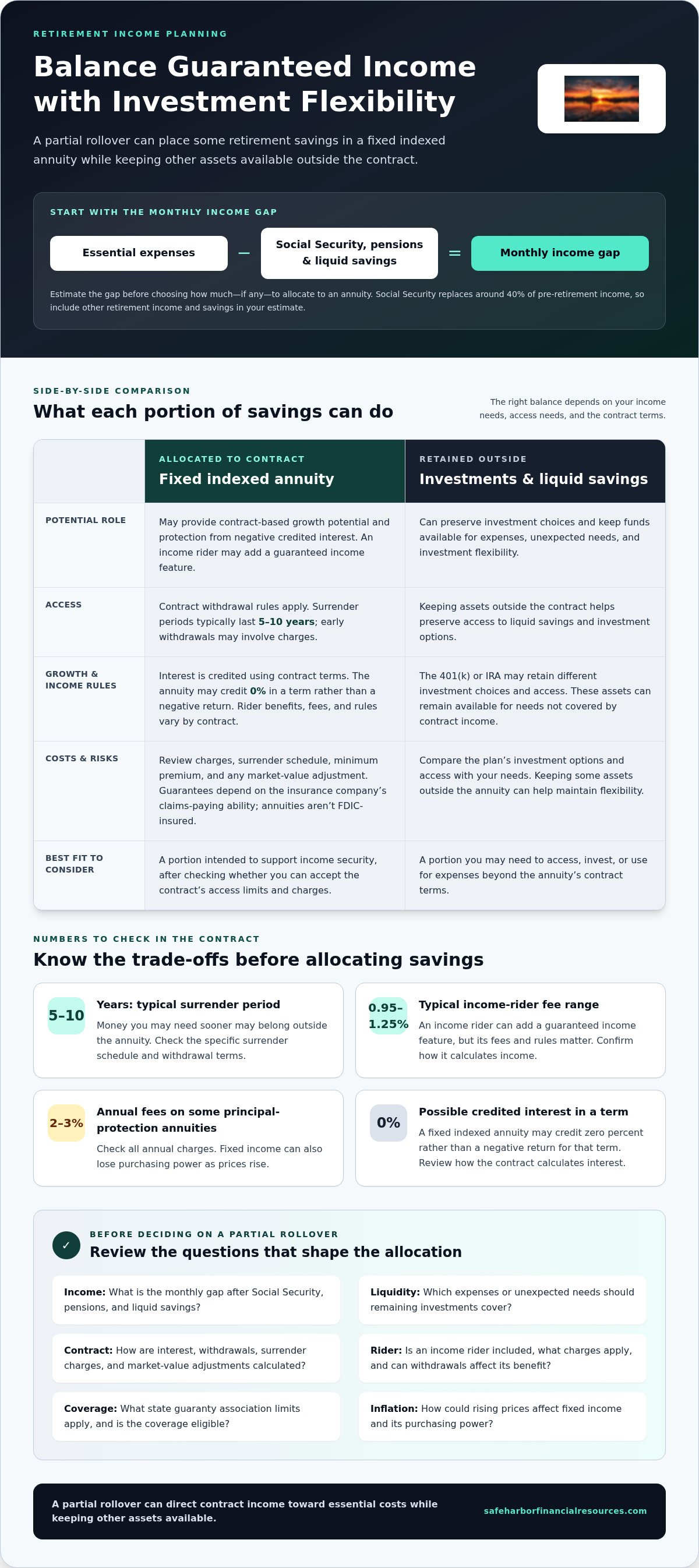
Set the annuity portion by comparing essential expenses with Social Security, pensions, and liquid savings. Keeping some assets outside the contract preserves investment flexibility.
Consider Protection and Annuity FeaturesEstimate your monthly income gap before choosing a portion. Social Security replaces around 40% of pre-retirement income, so include other retirement income and savings in your estimate. A fixed indexed annuity credits interest using contract terms and may credit zero percent in a term, rather than a negative return. An income rider can add a guaranteed income feature, but its fee and rules matter.
Review Coverage, Costs, and RisksRead the contract’s charges, surrender schedule, minimum premium, and any market-value adjustment terms. Surrender periods typically last 5-10 years; income-rider fees typically range from 0.95% to 1.25%. State guaranty association coverage and limits depend on state rules and coverage eligibility. Annuities aren’t FDIC-insured, and guarantees depend on the insurance company’s claims-paying ability. How could inflation affect income, and what adjustment might apply to an early withdrawal?Some annuities with principal-protection features charge annual fees around 2% to 3%. Fixed income can also lose purchasing power as prices rise.
Prepare Questions for an Advisor or InsurerAsk how the contract calculates interest, whether it includes an income rider, and what charges and withdrawal rules apply. Also ask about state guaranty association limits, minimum premiums, surrender charges, and market-value adjustments. Which expenses will the remaining investments cover? A partial rollover can direct contract income toward essential costs while keeping other assets available for investment and unexpected needs.
Rolling over a non-contributing 401(k) into a fixed indexed annuity
An old 401(k) can stay invested, but its lack of new contributions may prompt a fresh look. Use these steps to decide whether a rollover fits your retirement income plan.
Locate the account and review its current options. Check whether the 401(k) still offers investments and services that suit your situation. If you're still employed, the plan may restrict rollovers while you work there. A non-contributing account alone doesn’t mean moving it is the right choice.
Compare the annuity contract with the plan before moving assets. A fixed indexed annuity can offer principal protection under its contract terms, but it has limits on access. Surrender periods typically last 5-10 years, and early withdrawals may involve charges. Keep enough liquid savings outside the contract for expenses you may need to cover.
Decide what role guaranteed income should play. An income rider may help structure future payments while other retirement assets remain invested elsewhere. Ask how the rider calculates income, what charges apply, and whether withdrawals affect the benefit. Annuity guarantees depend on the issuing insurance company’s claims-paying ability.
Arrange a direct rollover if the plan permits it, then track the transfer. The funds move from the retirement plan to the annuity without being paid to you. A direct 401(k)-to-annuity rollover typically takes 2-4 weeks. Confirm the receiving contract is qualified for the rollover and review its crediting method, withdrawal terms, surrender period, and annual charges before signing.
For a focused review of your retirement income approach, discuss your rollover options.
Safe Harbor Financial Resources: Medicare Supplement Insurance (Medigap)
Safe Harbor Financial Resources offers Medicare Supplement Insurance (Medigap), a separate consideration from a 401(k) rollover. As you plan retirement income, reviewing healthcare coverage alongside savings can help clarify how your overall budget may fit together.
Safe Harbor Financial Resources helps Palm Beach Gardens residents understand Medicare and insurance choices, including Medigap. The agency also offers term life insurance, whole life insurance, and life insurance with living benefits for people reviewing broader protection needs. These products serve different purposes, so consider each in light of your priorities rather than treating insurance as a substitute for rollover planning.
Contact Safe Harbor Financial Resources to discuss your coverage needs.
Choose the Retirement Plan That Fits Your Next Chapter
Your next step is to connect each retirement decision to the life you want your savings to support. Before rolling a 401k into a fixed indexed annuity, consider how your priorities may change over time, including income needs, access to savings, and protection for loved ones. A clear plan can help you approach these choices with greater purpose, rather than feeling pressured to move quickly.
Safe Harbor Financial Resources offers Medicare Supplement Insurance (Medigap), Life Insurance with Living Benefits, and Term Life Insurance. If you’re also reviewing healthcare coverage or life insurance as part of your broader financial picture, contact Safe Harbor Financial Resources to discuss your needs. Take the next step at a pace that feels right, with your goals guiding the way.
Frequently Asked Questions
Why Would You Roll Over an IRA or 401(k) Into an Annuity?
A rollover may help someone turn part of their retirement savings into contract-based income or pursue principal protection under an annuity’s terms. For example, a person rolling a 401k into a fixed indexed annuity might use a portion for future income while keeping other investments accessible. The trade-off is reduced flexibility: contract charges, surrender terms, and withdrawal rules affect access.
What Are the Tax Rules and Implications for Rolling Over an IRA or 401(k) Into an Annuity?
A properly completed rollover between eligible qualified accounts generally avoids current tax. A direct transfer keeps the funds moving between institutions; if a distribution is paid to you, the IRS generally requires an indirect rollover within 60 days. The Internal Revenue Service says a 401(k) distribution paid to the account holder is subject to 20% automatic federal tax withholding. A pretax-to-Roth conversion generally creates taxable income.
What Types of Annuities Are There?
Common annuity types include fixed, fixed indexed, and variable contracts. Fixed annuities use contract terms to determine interest or payouts; fixed indexed annuities calculate interest using an index-linked formula. Variable annuities expose account value to investment performance. Annuities may also be immediate, with income starting soon after purchase, or deferred, with value accumulating before payments begin.
Can I Use My 401(k) or IRA to Buy an Annuity Without Paying Taxes?
Yes, eligible retirement funds can generally move to an annuity within a qualified account without immediate tax when rollover rules are followed. For example, a direct transfer from a traditional 401(k) to a qualified annuity preserves pretax treatment. Taking possession of funds can bring withholding and deadline requirements. Converting pretax savings to a Roth annuity is generally taxable.
Do 401(k)s Offer Annuities?
Some 401(k) plans include annuity contracts as investment or income options, while others don’t. The available choices depend on the employer plan’s design. If a plan’s annuity option is discontinued, participants may be able to transfer the annuity to another employer-sponsored plan or an IRA under the SECURE Act. Review the plan’s current menu and transfer provisions.



Comments