


Florida Chronic Illness Rider Life Insurance: 2026 Guide
Could life insurance help cover needs during a serious illness while leaving less for the people you love later? That trade-off is central to understanding chronic illness rider life insurance Florida residents may consider. It’s reasonable to want clear answers about what qualifies as a chronic illness and how using benefits could affect your policy’s death benefit.
A chronic illness rider may let you access part of your life insurance death benefit while you’re living, if you meet the policy’s eligibility requirements. The amount paid is generally deducted from the benefit beneficiaries receive later. This guide explains how accelerated benefits typically work and what to review, including qualifying conditions, medical certification, payout limits, and how chronic illness benefits differ from terminal illness benefits. Understanding the terms can help you compare options and weigh the trade-offs before making a decision.
What Is a Chronic Illness Rider on Life Insurance in Florida?
A chronic illness rider is a feature attached to some life insurance policies. If the policyholder meets the contract’s requirements, it may allow them to receive part of the death benefit early. The rider’s name alone doesn’t explain who qualifies or how much may be paid. For anyone considering chronic illness rider life insurance Florida options, the policy wording is the key guide: definitions, eligibility rules, documentation, and benefit calculations can differ between contracts.
An accelerated life insurance benefit advances part of the policy’s death benefit; it isn’t a separate payment from health insurance. This distinction matters when planning for care or other expenses. A rider’s payment comes from the life insurance coverage, while health insurance benefits are governed by a separate policy.
How a living benefit may affect your policy
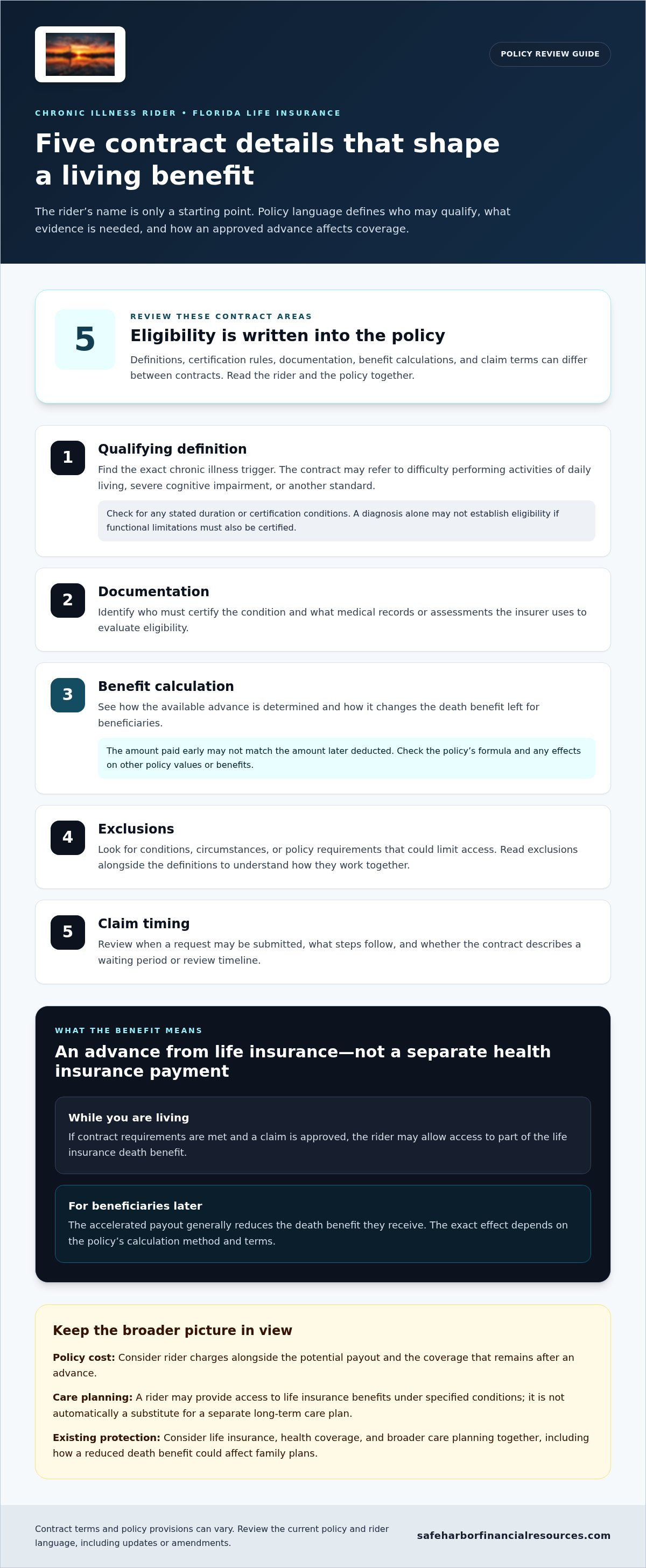
If a claim is approved, the accelerated payout generally reduces the death benefit left for beneficiaries. The exact effect depends on the policy’s calculation method and terms, so don’t assume the amount paid early will match the amount later deducted. Read the contract’s benefit formula and note any conditions that affect the remaining coverage.
Eligibility also depends on the policy language. Some contracts refer to difficulty performing activities of daily living or severe cognitive impairment, but definitions and required medical records may vary. A diagnosis alone, for example, may not establish eligibility if the contract also requires certification of functional limitations.
Read the trigger: Identify the contract’s definition of chronic illness and any duration or certification requirements.
Check the benefit calculation: Understand how an approved advance changes the amount available to beneficiaries.
Review documentation terms: Note what medical evidence the policy requires to assess a claim.
How to Evaluate Chronic Illness Rider Terms Before Choosing Life Insurance
Compare contract details, not just the rider label. The rider’s name is a starting point; its contract language determines what access may actually look like. Use this checklist to compare chronic illness rider life insurance options without assuming one policy’s terms apply to another.
Qualifying definition: Find the exact chronic illness trigger. Does it require difficulty with activities of daily living, severe cognitive impairment, or another standard? Note any stated duration or certification conditions.
Documentation: Identify who must certify the condition and what medical records or assessments the insurer uses to evaluate eligibility.
Benefit calculation: See how the available advance is determined and how it changes the remaining death benefit. Check whether the policy explains effects on other policy values or benefits.
Exclusions: Look for conditions, circumstances, or policy requirements that could limit access. Read definitions alongside exclusions to understand how they work together.
Claim timing: Review when a request may be submitted, what steps follow, and whether the contract describes a waiting period or review timeline.
Questions to answer from the policy contract
Consider any rider charges alongside the potential payout and the reduction to beneficiaries’ proceeds. A benefit’s value depends on the policy’s full cost and how much coverage remains after an advance. Compare its role with broader long-term care planning, too. A rider may provide access to life insurance benefits under specified conditions, but it isn’t automatically a substitute for a separate long-term care plan.
For a clearer review of life insurance with living benefits, discuss the contract language and how it relates to your priorities with a licensed insurance specialist.
Florida Life Insurance Guidance: Make a Confident, Informed Next Step
Start with the documents, not an assumption based on a rider’s name. Review the current policy and rider language, including updates or amendments, and use authoritative, current sources for Florida-specific insurance information. Rules and policy provisions can change, so a general explanation or another insurer’s example should not be treated as a promise about your coverage.
Consider the rider alongside the protection you already have and the people who depend on it. Would an early benefit help address a possible care need? How would a reduced death benefit affect your family’s plans? Think about life insurance, existing health coverage, and broader care planning together. The right balance is personal, and a rider is only one part of that picture.
When a local conversation can bring clarity
For Palm Beach County residents, Safe Harbor Financial Resources offers patient, clear, no-pressure guidance on life insurance options with living benefits. Licensed insurance specialist Dennis Richards brings over a decade of experience to conversations about policy choices and family priorities. If nursing home expenses are part of your planning, the article How to Protect Assets from Nursing Home Costs in Florida: A 2026 Senior Guide can help frame related questions.
Bring your policy documents and note what you want to understand, such as eligibility language, potential benefit effects, and how existing coverage fits your goals. You can explore life insurance guidance at a pace that feels comfortable. A careful review can make chronic illness rider life insurance Florida decisions clearer and more connected to your family’s needs.
Take the Next Step Toward Confident Coverage
Your life insurance decisions deserve to reflect more than a single future possibility. Consider how your priorities may change over time, who relies on your coverage, and what questions you want answered before choosing or adjusting a policy. A thoughtful review can help you consider your family’s needs rather than rely on a rider’s title or a general description. For chronic illness rider life insurance Florida residents are considering, clear guidance can make the details easier to weigh without rushing into a choice.
Safe Harbor Financial Resources offers clear, honest, no-pressure life insurance guidance for Palm Beach County residents. Dennis Richards is a licensed insurance specialist with over a decade of experience, serving the community from Palm Beach Gardens. Take the next step at a pace that feels right for you: explore life insurance guidance.
Frequently Asked Questions
Is a chronic illness rider the same as long-term care insurance?
No. A chronic illness rider is attached to life insurance and may accelerate part of its death benefit, while long-term care insurance is separate coverage with its own benefit structure and eligibility terms. Treat these as related planning tools, not interchangeable protection. Compare the care needs each could help address and what coverage would remain.
Can you add a chronic illness rider after a life insurance policy is issued?
Possibly, but it depends on the policy and the insurer’s rules for changes after issue. Some contracts may not allow a rider to be added later, while others may require an application or approval. Review the policy’s amendment provisions and any written options for changing coverage. Don’t assume a rider available with a new policy can also be added to an existing one.
Are benefits from a chronic illness rider taxable?
They may be excluded from federal gross income when they meet applicable requirements, but tax treatment isn’t automatic for every payment. IRS rules can depend on the nature and amount of benefits and the circumstances of the insured. Read the policy’s tax disclosures and keep records of payments. A tax professional can help assess how the rules apply to your situation.
Can a chronic illness rider pay for home care or assisted living?
Potentially. Once an eligible claim is approved and benefits are paid, the funds may generally be used for expenses such as home care or assisted living. The rider may not reimburse a specific provider or cover the full cost of care; its payment is governed by the contract and can reduce the life insurance benefit remaining for beneficiaries. Check the policy terms before relying on an advance for a care budget.



Comments