


What Is a Critical Illness Rider on Life Insurance?
If a serious diagnosis gave you access to life insurance money while you were still living, what could that mean for the protection your family may need later? That trade-off is why understanding what is a critical illness rider on life insurance matters before adding one. A rider may let you access part of a death benefit after a qualifying diagnosis, but covered conditions, claim requirements, and payout limits vary by policy. Standalone critical illness insurance is a separate policy.
Policy language can make these options difficult to compare, especially when it is unclear how a claim affects the remaining death benefit. This guide explains how a rider generally works, what terms to review, and how to assess a potential payout alongside the coverage left for your beneficiaries. Use the actual policy and rider documents to understand the conditions and trade-offs before deciding whether living benefits fit your broader coverage plans.
What Is a Critical Illness Rider on Life Insurance?
If you’re asking what is a critical illness rider on life insurance, the short answer is that it’s an optional feature attached to a life insurance policy. It may provide a benefit if the insured person receives a diagnosis that meets the policy’s definition of a covered illness. The benefit is intended to offer financial support while the person is living, subject to the contract’s conditions.
Covered conditions and payment rules vary by policy, so the contract, not the rider’s name, determines when a benefit may be paid. A neutral overview of critical illness insurance can help explain the general concept, but your policy documents define the coverage you have.
This video offers another brief explanation of how a critical illness rider works:
How Is a Rider Different From Standalone Critical Illness Insurance?
A rider is connected to its underlying life insurance policy. Its terms and effect on that policy are set by the contract it is added to. Standalone critical illness insurance, by contrast, is a separate policy with its own coverage terms and benefit structure. Because the arrangements are different, don’t assume that a feature or claim rule in one applies to the other.
Neither label tells you exactly which illnesses qualify or what evidence a claim requires. Read the relevant contract for illness definitions, exclusions, claim conditions, and how any benefit is calculated. When comparing coverage, note these terms side by side rather than relying on a product name or summary. This makes it easier to see how living benefits fit with your broader life insurance needs.
How Can a Critical Illness Rider Pay a Benefit, and Affect Life Coverage?
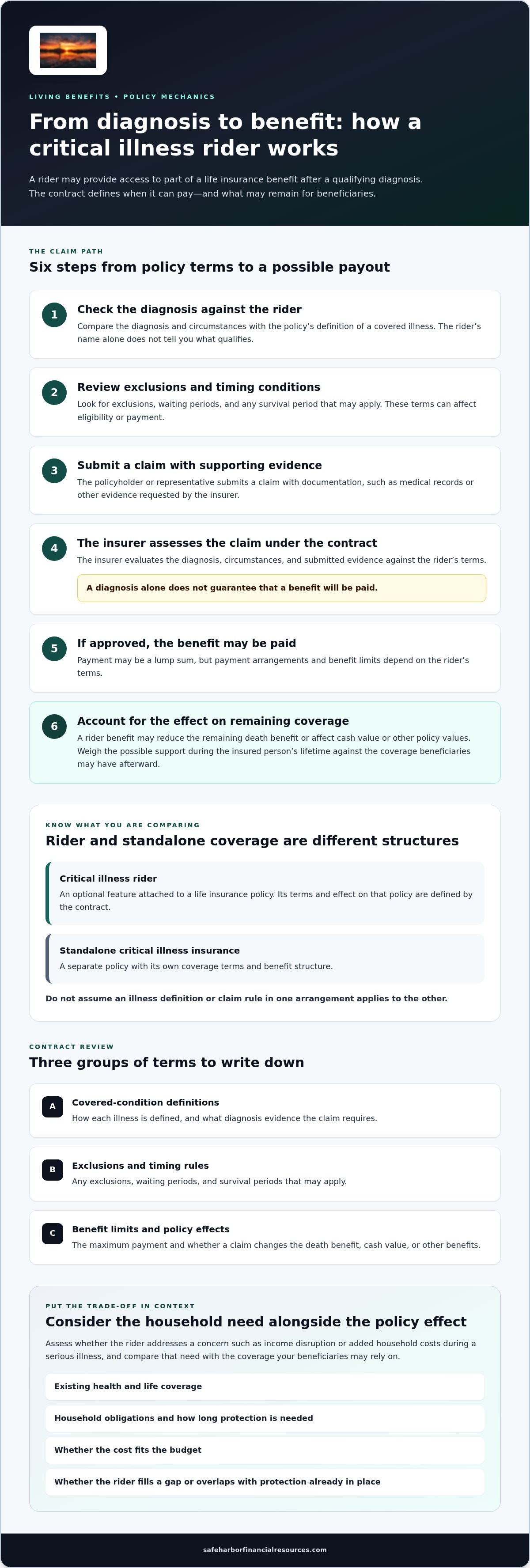
A claim usually begins with comparing the diagnosis and circumstances against the rider’s terms. The policyholder or representative submits a claim with supporting documentation, such as medical records or other evidence requested by the insurer. The insurer assesses the claim under the contract, so a diagnosis alone doesn’t guarantee payment.
If approved, the benefit may be paid as a lump sum, though payment arrangements and limits depend on the rider. As Policygenius explains in its overview of the critical illness rider, an accelerated benefit may come from the life policy’s death benefit.
A rider benefit may reduce the policy’s remaining death benefit or affect other policy values, depending on its terms. Before relying on a potential payout, consider both what it could provide during the insured person’s lifetime and what coverage may remain for beneficiaries afterward.
What Policy Terms Should You Read Before Relying on a Benefit?
Use the issued policy and current rider documents as your guide. Review:
Covered-condition definitions: Check how the contract defines each illness and what diagnosis evidence it requires.
Exclusions and timing rules: Look for exclusions, waiting periods, and any survival period that may apply.
Benefit limits and policy effects: Find the maximum payment and whether a claim changes the death benefit, cash value, or other benefits.
For a practical comparison, write down the relevant definition, claim condition, limit, and policy effect for each option you are considering. Terms can differ, so a general description is no substitute for reviewing your own coverage. If you’re considering how living benefits fit into a broader plan, life insurance guidance can help you think through the policy language.
How to Decide Whether a Critical Illness Rider Fits Your Life Insurance Needs
Knowing what is a critical illness rider on life insurance is only the first step. Start by identifying the financial concern you want to address, such as income disruption or added household costs during a serious illness. Then compare that concern with the rider’s qualifying conditions and claim rules. Finally, look at how a payout could affect the life coverage your beneficiaries may rely on.
Your wider circumstances matter, too. Review your existing health and life coverage, household obligations, how long you expect to need protection, and whether the cost fits your budget. Consider whether the rider addresses a gap in your current coverage or overlaps with protection you already have. It should be assessed alongside the rest of your financial plan, not in isolation.
What Questions Can Help You Compare Rider Terms Calmly?
Use the contract to answer specific questions rather than relying on the rider’s label or a general description:
Which diagnoses qualify, and what medical evidence does the claim require?
What exclusions, limits, or timing conditions could affect eligibility or payment?
If a benefit is paid, how might it change the remaining death benefit or other policy values?
Write down the answers and what matters most to your household, then weigh those priorities against the actual terms. This can clarify whether the rider addresses a meaningful concern and what trade-off a payout could create for your remaining coverage.
Safe Harbor Financial Resources provides guidance on life insurance with living benefits. For people reviewing coverage in Palm Beach Gardens and Palm Beach County, personalized life coverage guidance can help put those benefits in the context of broader coverage needs.
Make Your Next Coverage Decision With Clarity
Understanding what is a critical illness rider on life insurance starts with looking beyond its name. A rider may offer access to a benefit after a qualifying diagnosis, but the contract sets the conditions. Review covered illnesses, claim requirements, exclusions, and how a payout could affect the remaining life insurance benefit or other policy values.
Then weigh those terms against your household obligations, existing coverage, budget, and how long you need protection. A focused review can show whether living benefits address a real concern and how they fit with the rest of your coverage.
Safe Harbor Financial Resources provides guidance on life insurance with living benefits in Palm Beach Gardens, Palm Beach County. Explore life insurance with living benefits to discuss how coverage may fit your needs.
Frequently Asked Questions
Is a critical illness rider the same as critical illness insurance?
No. A critical illness rider is attached to a life insurance policy, while standalone critical illness insurance is a separate policy. Understanding what is a critical illness rider on life insurance means looking at the rider alongside its underlying policy. In either structure, benefits, covered conditions, exclusions, and claim requirements depend on the contract, so neither option is automatically broader or better.
What illnesses does a critical illness rider cover?
The rider’s contract defines which conditions may qualify, and those definitions can differ between policies. Review the precise medical definitions, the evidence required to support a diagnosis, and any exclusions. Also check for waiting periods or survival periods that may apply. A diagnosis by itself doesn’t establish eligibility; the claim must meet the terms in the applicable rider.
Does using a critical illness rider reduce the life insurance death benefit?
It can, but the effect depends on the policy and rider design. A benefit may reduce the death benefit available to beneficiaries or affect other policy values. Read the issued policy and rider documents to see how a claim would be calculated and what may remain afterward. Don’t assume a general description explains the effect on your specific coverage.
Can you add a critical illness rider to any life insurance policy?
No. Availability and eligibility depend on the insurer, policy, application, and underwriting rules. Term, whole, and universal life policies don’t necessarily offer identical rider options or conditions. Review the specific policy documents and understand eligibility requirements before choosing coverage. In Palm Beach Gardens, Safe Harbor Financial Resources provides guidance on life insurance and living benefits as part of a broader coverage review.


Comments