


Understanding Your Medicare Summary Notice: The Complete 2026 Guide
What if that official government envelope in your mailbox isn't a demanding medical bill, but a financial compass designed to shield your hard-earned savings? When cryptic codes and deductibles arrive, it's natural to feel a sudden jolt of worry. Genuine clarity begins right here, because understanding your Medicare summary notice is your safest harbor against billing errors and unexpected out-of-pocket costs.
It's completely understandable to feel uneasy when dense statements land on your kitchen table, especially when you want to enjoy retirement without stressful financial surprises. You'll learn how to read each column with confidence, verify approved coverage, and dispute questionable charges before they ever affect your nest egg. Here is your steady, step-by-step roadmap to turning confusing healthcare paperwork into reliable peace of mind.
What Is a Medicare Summary Notice and Why It's Not a Bill
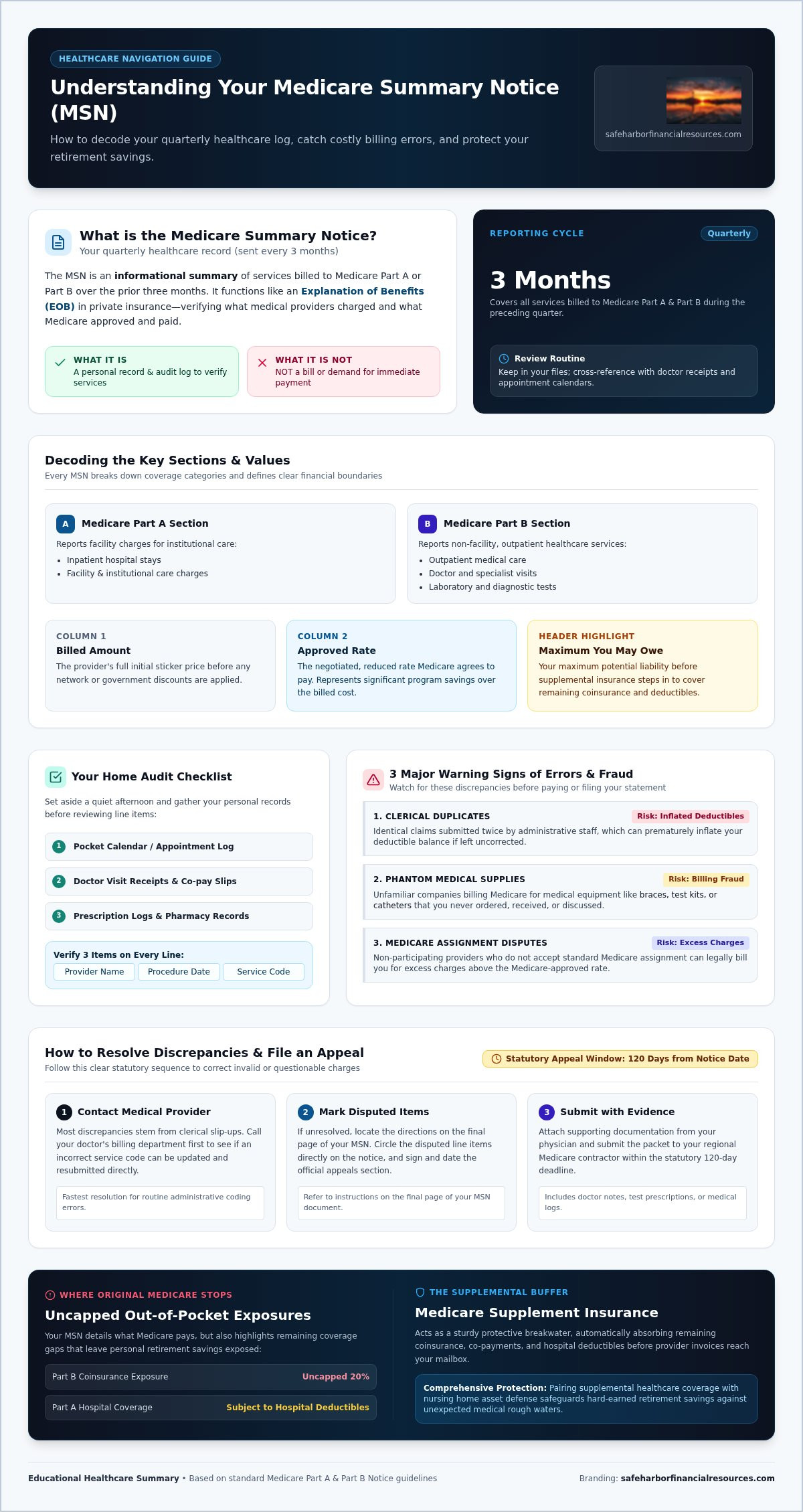
Opening an official government statement filled with billing codes can feel daunting, but you can take a deep breath. The Medicare Summary Notice is an informational summary detailing services billed to Medicare Part A or Part B over the prior three months. It acts as your personal healthcare log rather than an invoice demanding payment. Understanding your Medicare summary notice begins with recognizing that it functions much like an Explanation of Benefits in private insurance, confirming what was charged and what the program covered.
To see how this document works in practice, watch this helpful walkthrough from patient advocates:
Decoding the Key Sections: Part A, Part B, and Patient Liability
Your statement organizes care into distinct parts to keep your records clear:
Part A vs. Part B: Part A highlights inpatient facility charges like hospital stays, while Part B reports outpatient care, doctor visits, and lab tests.
Approved Rates vs. Billed Amounts: Compare the provider's sticker price against the lower Medicare-approved rate to see the negotiated savings applied to your care.
Maximum You May Owe: Located prominently in the summary header, this figure defines your maximum possible responsibility before any Medicare Supplement Insurance steps in to pay remaining coinsurance or deductibles.
Mastering these details makes understanding your Medicare summary notice straightforward, ensuring you never pay a provider more than your actual share.
How to Spot Errors and Fraud on Your Medicare Statement
A proactive approach to understanding your Medicare summary notice starts with establishing a calm, methodical routine at home. Rather than skimming through complex rows of figures, set aside a quiet afternoon to examine each line. Before sitting down with your official Medicare Summary Notice, gather your pocket calendar, doctor visit receipts, and prescription logs. Always verify provider names, procedure dates, and service codes against your personal medical records before filing your paperwork away. This structured habit anchors your focus, helping you catch administrative slip-ups long before they create financial friction.
Recognizing Warning Signs: Duplicate Billings, Unperformed Services, and Unfamiliar Providers
Careful scrutiny reveals common discrepancies that occasionally drift into claims records:
Clerical duplicates: Busy administrative staff sometimes submit identical claims twice, which can prematurely inflate your deductible balance if left uncorrected.
Phantom supplies: Watch closely for unfamiliar medical companies billing for braces, test kits, or catheters you never ordered, received, or discussed with your physician.
Assignment disputes: Verify whether your doctor accepted standard Medicare assignment, since non-participating providers can legally bill you for excess charges above the approved rate.
Developing confidence in understanding your Medicare summary notice acts as a steady shield for your retirement assets. If unexpected co-insurance charges appear or you want stronger insulation against future healthcare gaps, exploring personalized Medicare reviews can provide the protective harbor and peace of mind you deserve.
How to Resolve Billing Discrepancies and Shield Your Savings from Gaps
Spotting an unfamiliar charge isn't a cause for alarm. Most discrepancies stem from clerical slip-ups that your doctor's billing department can correct with a quick phone call. Always contact your medical provider first to see if an incorrect service code can be updated and resubmitted. If a coverage dispute remains unresolved, the final page of your statement provides clear directions. You have a 120-day statutory window from the notice date to file a formal appeal with your regional Medicare contractor.
Navigating Claims Appeals and Closing Out-of-Pocket Gaps with Supplemental Coverage
Filing an appeal is straightforward. Simply circle the disputed line items directly on your notice, sign and date the appeals section, and attach supporting documentation from your physician. Beneficiaries seeking extra guidance can rely on proven strategies for detecting Medicare errors and fraud to double-check their records before submitting.
True peace of mind means preventing unexpected medical exposures entirely. A comprehensive approach to understanding your Medicare summary notice reveals where Original Medicare leaves off, particularly with uncapped 20% Part B coinsurance and hospital deductibles. Pairing your benefits with Medicare Supplement Insurance creates a sturdy breakwater, absorbing these remaining costs automatically before provider invoices ever reach your mailbox. For lasting security, pairing supplemental healthcare with long-term safeguards like nursing home asset defense ensures your retirement savings stay sheltered from unexpected rough waters.
Chart a Clear Course for Your Healthcare Coverage
Managing healthcare paperwork doesn't have to feel like braving stormy seas. By treating your quarterly statements as an informational compass rather than an unexpected bill, you keep total control over your medical records. Spotting billing errors early protects your hard-earned benefits, while understanding your Medicare summary notice empowers you to address coverage gaps before they ever reach your finances.
You don't have to steer through these decisions alone. Safe Harbor's dedicated Palm Beach Gardens professionals offer personalized evaluations to match you with dependable Medigap coverage designed to absorb out-of-pocket costs. Whenever you're ready to secure smooth sailing for your retirement, schedule your complimentary Medicare review with Safe Harbor Financial Resources and enjoy the lasting peace of mind you deserve.
Frequently Asked Questions
How often will I receive a Medicare Summary Notice in the mail?
You will receive a paper Medicare Summary Notice in the mail every 180 days, or twice a year, provided Medicare processed a claim during that period. If you had no healthcare visits or medical procedures, no statement is sent. For faster updates, Palm Beach County retirees can log into Medicare.gov anytime to review electronic statements processed every month.
What is the main difference between an MSN and an Explanation of Benefits?
The primary difference lies in the type of healthcare coverage issuing the statement. You receive a Medicare Summary Notice directly from the federal government if you're enrolled in Original Medicare Parts A and B. Private insurance companies issue an Explanation of Benefits if you're enrolled in Medicare Advantage or Part D plans. Neither document is a bill.
What should I do if my Medicare Summary Notice shows a denied claim?
First, call your physician's billing office to see if a simple clerical error caused the rejection. If the claim remains unresolved, understanding your Medicare summary notice gives you the exact roadmap to appeal. You have 120 calendar days from the notice date to circle the disputed charge, sign the form, and mail it to your assigned Medicare contractor.
Can a Medicare Supplement plan cover the patient responsibility shown on my notice?
Yes, Medicare Supplement Insurance is specifically structured to absorb those out-of-pocket costs. When understanding your Medicare summary notice, the column showing what you may owe reflects standard deductibles and coinsurance. A tailored Medigap policy pays its portion directly to participating providers, giving Palm Beach Gardens retirees dependable protection against unexpected medical bills.


Comments