


Medicare Enrollment Mistakes to Avoid in 2026
What if postponing a Medicare decision because it feels confusing leads to a coverage gap or lasting penalty? It’s an understandable concern: enrollment periods sound alike, and employer coverage can change which steps make sense. The most important Medicare enrollment mistakes to avoid often start with assuming the same deadline or eligibility rule applies to everyone.
This guide explains which dates and decisions to check in 2026, including what each enrollment period allows, what to verify before delaying Part B or drug coverage, and how to compare costs and plan options before changing coverage. You’ll also learn why it matters to confirm employer coverage details with your benefits administrator instead of relying on assumptions. Once the enrollment basics are clear, you can consider whether Medicare Supplement Insurance fits your needs as one part of your coverage decision. A calm, informed next step starts with knowing what to check.
Medicare Enrollment Mistakes to Avoid: Confusing the Deadlines
The right Medicare dates depend on your eligibility and existing coverage, not guesswork. The Medicare (United States) overview explains how Parts A, B, C, and D fit into the program. Each enrollment period has a specific purpose:
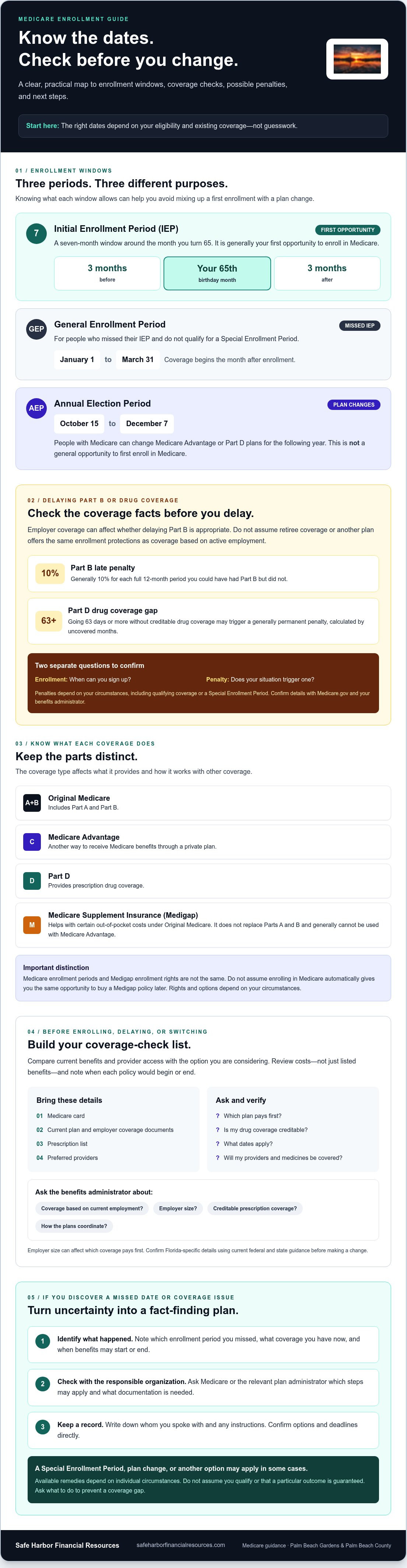
Initial Enrollment Period (IEP): A seven-month window that starts three months before the month you turn 65 and ends three months after. It’s generally your first opportunity to enroll in Medicare.
General Enrollment Period (GEP): January 1 through March 31, for people who missed their IEP and don’t qualify for a Special Enrollment Period. Coverage begins the month after enrollment.
Annual Election Period (AEP): October 15 through December 7. People with Medicare can change Medicare Advantage or Part D plans for the following year. This isn’t a general opportunity to first enroll in Medicare.
When can delaying Medicare enrollment create a problem?
Employer coverage can affect whether delaying Part B is appropriate. Ask the benefits administrator whether your coverage is based on current employment, how many employees the employer has, and whether prescription coverage is creditable. Employer size can affect which coverage pays first. Don’t assume a retiree plan or other coverage provides the same enrollment protections as coverage based on active employment.
Medicare.gov guidance says people with qualifying coverage through current employment may be able to use a Special Enrollment Period for Part B after that coverage or employment ends. Part B’s late penalty is generally 10% for each full 12-month period you could have had Part B but didn’t. For Part D, going 63 days or more without creditable drug coverage may trigger a generally permanent penalty, calculated by uncovered months.
Keep the distinction clear: A missed enrollment window affects when you can sign up. A penalty depends on your circumstances, including whether you had qualifying coverage or a Special Enrollment Period. Before delaying enrollment, confirm both questions with Medicare.gov and your benefits administrator.
How to Avoid Medicare Enrollment Mistakes Before Choosing Coverage
A coverage decision is easier to assess when you first gather the facts that apply to you. Before enrolling, delaying, or switching, check your eligibility, current coverage, prescriptions, providers, and relevant enrollment dates. Medicare’s official Medicare publications can help you verify how coverage works and what questions to ask.
Keep the coverage types distinct: Original Medicare includes Part A and Part B. Medicare Advantage, or Part C, is another way to receive Medicare benefits through a private plan. Part D provides prescription drug coverage. Medicare Supplement Insurance, also called Medigap, helps with certain out-of-pocket costs under Original Medicare. It isn’t a replacement for Parts A and B and generally can’t be used with Medicare Advantage.
Medicare enrollment periods and Medigap enrollment rights aren’t the same. Don’t assume that enrolling in Medicare automatically gives you the same opportunity to buy a Medigap policy later. Rights and options can depend on your circumstances. Confirm Florida-specific details using current federal and state guidance before making a change.
What should you check before declining or changing coverage?
Compare your current benefits and provider access with the coverage you’re considering. Check whether your prescriptions are covered, note when each policy would begin or end, and ask your employer’s benefits administrator and Medicare how the plans coordinate. Review the costs you may pay under each option, not just the listed benefits. A gap between coverage dates or a provider who isn’t in a plan’s network can matter when comparing options.
Bring: your Medicare card, current plan and employer coverage documents, prescription list, and preferred providers.
Ask: Which plan pays first? Is my drug coverage creditable? What dates apply? Will my providers and medicines be covered?
These checks can help prevent Medicare enrollment mistakes to avoid. For individualized guidance on Medicare plans and Medicare Supplement Insurance, you can also speak with Safe Harbor Financial Resources, serving people in Palm Beach Gardens and Palm Beach County.
What to Do Next After a Medicare Enrollment Mistake
Discovering a missed date or unexpected coverage issue can feel unsettling, but acting promptly can clarify your options. First, identify what happened: which enrollment period you missed, what coverage you have now, and when benefits may start or end. Then contact Medicare or the relevant plan administrator to ask which steps may apply to your situation. Keep notes about whom you spoke with and any instructions they provide.
Available remedies depend on individual circumstances. A Special Enrollment Period, plan change, or other option may apply in some cases, but don’t assume you qualify or that a particular outcome is guaranteed. Ask what documentation is needed and confirm important details directly with the organization responsible for your coverage.
How can a local Medicare professional help you review your options?
A fact-finding conversation can help organize the details: your current Medicare and employer coverage, the dates involved, your health needs, and the questions you still have. For Palm Beach Gardens and Palm Beach County residents, Safe Harbor Financial Resources offers guidance on Medicare plans, including Medicare Supplement Insurance. Medigap is one coverage decision to review, not a fix for every enrollment issue or a promise of eligibility or savings.
Write down the enrollment or coverage problem and when you noticed it.
Gather your Medicare card, plan documents, employer coverage information, and any notices about deadlines or benefits.
Ask Medicare or your plan administrator what options and deadlines apply, and what to do to prevent a coverage gap.
These steps can turn Medicare enrollment mistakes to avoid into a clearer plan for what to verify next. For a measured conversation about your Medicare Supplement Insurance questions, talk with a licensed insurance professional.
Take Your Next Medicare Step With Confidence
The Medicare enrollment mistakes to avoid often start with treating every deadline or coverage situation as the same. Check which enrollment period applies to you, verify how current or employer coverage affects your choices, and compare providers, prescriptions, costs, and coverage dates before making a change. If something has gone wrong, contact Medicare or your plan administrator promptly to ask which options fit your circumstances.
Once the timing is clear, you can review Medicare Supplement Insurance as one part of your broader coverage decision. Safe Harbor Financial Resources is an independent agency owned and operated by licensed insurance professionals, offering guidance on Medicare plans and Medicare Supplement Insurance to people in Palm Beach Gardens and Palm Beach County.
Bring your questions and coverage details to a conversation, without assuming you need to decide before understanding your options. Discuss your Medicare coverage questions with a licensed professional and take your next step with greater clarity.
Frequently Asked Questions
Can I delay Medicare Part B if I have health insurance through work?
Possibly, if you have qualifying coverage based on current employment, but don’t assume every workplace plan lets you safely delay Part B. Employer size, whether you or a spouse is actively working, and the plan’s rules can affect how coverage coordinates with Medicare. Ask the benefits administrator and Medicare what applies to you, including when to enroll to avoid a gap or penalty. This is a key Medicare enrollment mistake to avoid.
What happens if I miss my Medicare enrollment period?
You may have to wait for another enrollment opportunity, and a late penalty or coverage gap could result. If you miss your Initial Enrollment Period and don’t qualify for a Special Enrollment Period, the General Enrollment Period runs January 1 through March 31; coverage begins the month after you enroll. Contact Medicare promptly to check whether an exception applies and confirm your next available enrollment date.
Is the Medicare Annual Enrollment Period the time to sign up for Medigap?
No. The Annual Election Period, October 15 through December 7, is for changing Medicare Advantage or Part D coverage, not a general Medigap enrollment window. Medigap enrollment rights are separate and depend on your circumstances. Before changing plans, check current federal guidance and Florida rules rather than assuming you can buy a policy later on the same terms. Palm Beach Gardens residents can seek individualized Medicare plan guidance.
How can I avoid a Medicare Part D late enrollment penalty?
Enroll in Part D when you’re eligible, or maintain other prescription coverage that Medicare considers creditable until you enroll. Before dropping employer or other drug coverage, ask the benefits administrator to confirm its creditable status and the dates it ends. The penalty is based on months without creditable coverage and may be permanent. Check your circumstances and next steps with Medicare before a coverage gap occurs.


Comments