


Living Life Insurance Policy Guide: Comparing Your Options for 2026
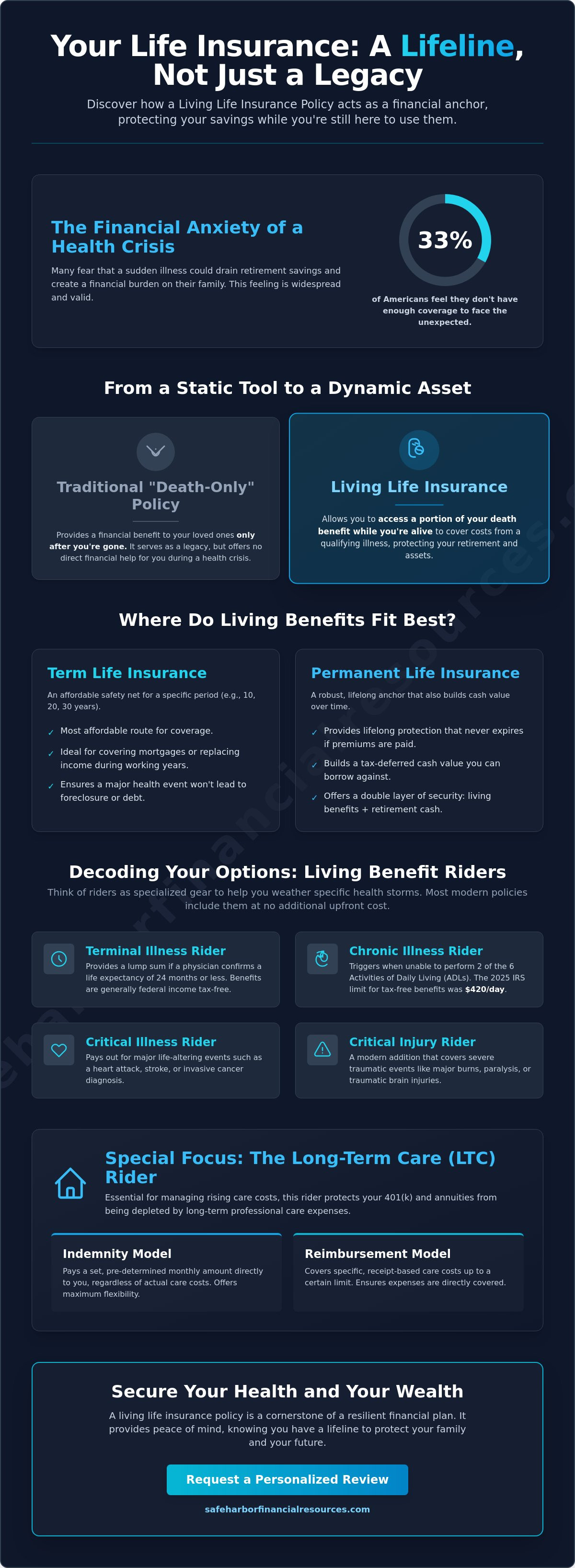
What if the most valuable part of your life insurance isn't the legacy you leave behind, but the lifeline it provides while you're still here to use it? Many people feel a quiet anxiety about the future, fearing that a sudden health crisis could turn them into a financial burden or drain the retirement savings they've spent decades building. You want to ensure your family stays protected, but you also need to know that you won't be left adrift if your own health falters. It's a heavy weight to carry, especially when 33% of Americans already feel they don't have enough coverage to face the unexpected.
This guide explores how a living life insurance policy acts as a reliable anchor for your financial plan. You'll discover how these modern policies allow you to access cash during a chronic or critical illness, effectively preserving your assets while you focus on recovery. We'll demystify the complexity of riders for 2026 and compare the best options to help you find a sense of calm and stability. By the end of this article, you'll understand how to secure a policy that offers both a protective refuge for your loved ones and a practical safety net for your own retirement.
What is a Living Life Insurance Policy and How Does it Work?
Most people view life insurance as a gift for the future, a way to ensure loved ones are cared for after they're gone. However, a living life insurance policy changes that narrative by acting as a financial refuge while you are still active and present. Instead of waiting for a claim that you'll never see, these policies allow you to access a portion of your death benefit to manage the high costs of a health crisis. It transforms your coverage from a static "death-only" tool into a dynamic asset that protects your retirement savings from being wiped out by medical bills.
While most people understand what life insurance is in a traditional sense, the living variety uses Accelerated Death Benefit (ADB) riders to provide immediate relief. These riders trigger when a physician diagnoses a terminal, chronic, or critical illness. Living benefits serve as a vital financial bridge, filling the gap between your standard health insurance and the high costs of long-term care when a medical crisis strikes.
To better understand how this protection works in real time, watch this helpful video:
Term vs. Permanent: Where Do Living Benefits Fit Best?
Choosing the right structure depends on your specific life stage and goals. Term life insurance with living benefits is often the most affordable route. It's an excellent choice for families who need to cover a mortgage or replace income during their working years. It provides a temporary safety net that ensures a heart attack or stroke won't lead to foreclosure.
Permanent options, such as whole or universal life insurance, offer a more robust, lifelong anchor. These policies build cash value over time, providing a double layer of security. You gain the ability to accelerate the death benefit for health needs while also having a pool of cash to supplement your retirement. For a deeper look at why these features are essential, explore our guide on the Living Benefits of Life Insurance: Debunking the "Death Benefit Only" Myth. Whether you choose term or permanent, the goal remains the same: ensuring your peace of mind is never compromised by a diagnosis.
Roundup of Living Benefit Riders: Comparing Your Options
Think of your insurance policy as a vessel. While the hull provides the basic structure, the riders are the specialized gear that helps you weather specific storms. A living life insurance policy isn't a one-size-fits-all solution. It's a customizable framework designed to address the specific health risks you may face. By understanding how these riders interact with your total death benefit, you can build a defense that is both robust and flexible.
Terminal Illness Rider: This provides a lump sum advance if a physician confirms a life expectancy of 24 months or less. Under the Health Insurance Portability and Accountability Act of 1996, these benefits are generally received free of federal income tax.
Chronic Illness Rider: This triggers when you're unable to perform two of the six "Activities of Daily Living" (ADLs), such as bathing or dressing. In 2025, the IRS per diem exclusion limit for these benefits was $420 per day.
Critical Illness Rider: This pays out for major life-altering events like heart attacks, strokes, or invasive cancer.
Critical Injury Rider: A modern addition to many plans, this covers severe traumatic events including major burns or traumatic brain injuries.
The Long-Term Care (LTC) Rider: A Florida Essential
For residents in Palm Beach Gardens, the rising cost of care facilities makes the LTC rider a vital component of any financial plan. Unlike standard health insurance, this rider allows you to tap into your death benefit to pay for professional care. It's important to choose between the "indemnity" model, which pays a set monthly amount regardless of actual costs, and the "reimbursement" model, which covers specific receipts. This choice ensures your fixed annuities and 401(k) assets remain untouched, allowing your retirement legacy to stay intact even during a health crisis. If you're unsure which rider fits your current stage of life, you can request a personalized review to clarify your options.
Modern policies often include these riders at no additional upfront cost, especially within indexed universal life or certain term products. This shift in the industry allows you to secure a protective refuge without immediate financial strain. By selecting the right combination of riders, you're not just buying insurance. You're creating a comprehensive safety net that respects both your health needs and your long-term financial goals.
Choosing the Right Living Life Insurance Policy for Your Future
Selecting the right coverage shouldn't feel like navigating a storm without a compass. It requires a clear, methodical approach to ensure your plan acts as a secure anchor rather than a financial weight. To find the living life insurance policy that fits your life, start by auditing your current health insurance. If you're nearing age 65, pay close attention to Medicare gaps. While Medicare is a vital resource, it often leaves significant holes in long-term care and specialized recovery that a living benefit policy can help fill.
Next, determine your specific liquidity needs. Ask yourself how much cash your family would require to maintain their lifestyle if you couldn't work for six months. This concrete number helps you calibrate the benefit amount so you aren't over-insured or left vulnerable. Finally, evaluate the carrier’s history. You want a partner with a proven track record of paying living benefit claims promptly. At Safe Harbor, we act as your professional navigator. We help you sift through the complexity to ensure your protection is precise and reliable.
Managing Costs and Objections
A common myth suggests that adding living benefits will double your premium. In reality, many modern policies include these riders as a built-in feature or at a very low cost. Using a living life insurance policy is often a more efficient "self-insured" strategy for long-term care than buying a standalone LTC policy. It provides a pool of funds you can use if you're ill, but if you stay healthy, the full death benefit remains for your heirs. You can verify your specific needs and see how these options fit your budget through a Safe Harbor professional assessment.
The Local Advantage in Palm Beach County
Florida’s insurance landscape is unique, and local expertise is essential for navigating our state's specific regulations and rising care costs. We understand the challenges facing Palm Beach County residents because we live and work here too. We view your retirement milestones as events to be celebrated, not feared. To stay connected with our community and receive regular tips on securing your financial future, follow Safe Harbor on Facebook. Let's work together to ensure your plan provides the calm and stability you deserve.
Securing Your Financial Refuge for the Years Ahead
Planning for the future shouldn't be a source of stress. It's an opportunity to build a protective barrier around your hard-earned retirement assets. By choosing a living life insurance policy, you ensure that a sudden health challenge doesn't capsize your financial stability. You've learned how these policies act as a bridge between your health coverage and long-term care, providing the cash you need when you need it most. Whether you're navigating Medicare transitions or looking for a way to self-insure against rising medical costs, the right riders offer a precise level of safety.
At Safe Harbor, we specialize in the synergy between Medicare and life insurance to create personalized strategies for our neighbors. Our local Palm Beach Gardens expertise allows us to guide you through Florida's unique landscape with integrity and clarity. We're here to help you turn complex choices into a steady plan for long-term security. Secure your peace of mind with a living benefits assessment from Safe Harbor today. You deserve a future that feels like a celebration, anchored by the certainty that you and your family are fully protected.
Frequently Asked Questions
Can I use living benefits for any reason, or only for medical bills?
You can use the funds from your living benefits for any purpose you choose once the rider triggers. While many people use the cash to manage medical bills, there are no restrictions on how you spend the money. It can cover your mortgage, pay for home modifications, or replace lost income. This flexibility allows you to focus on your recovery without the stress of mounting daily expenses.
How does accessing living benefits affect the payout to my beneficiaries?
Accessing living benefits will reduce the final payout your beneficiaries receive upon your passing. Any amount you accelerate during your lifetime is subtracted from the total death benefit of your living life insurance policy. It's helpful to think of this as using a portion of your legacy early to ensure you have a secure refuge during a health crisis today. Your remaining coverage stays intact to protect your loved ones later.
Are living benefit payouts from a life insurance policy taxable in Florida?
Living benefit payouts are generally free from federal income tax for terminally ill individuals. Since Florida doesn't have a state income tax, you won't face additional state-level taxation on these funds. For those with a chronic illness, benefits are typically tax-excludable up to a specific daily limit, which was $420 per day in 2025. You should always file Form 8853 with your tax return to properly claim this exclusion.
Do I need a separate medical exam to add a living benefit rider to my policy?
You often don't need a separate medical exam to include these riders, as many modern policies include them by default. This is especially true for the 50% of people who prefer purchasing insurance without a physical assessment. If you're applying for a new living life insurance policy, many carriers use simplified underwriting. However, adding a rider to an existing policy later may require a health review to ensure your coverage remains a stable anchor.


Comments