


Living Benefits of Life Insurance: A Guide to Your Financial Safety Net in 2026
- dcjrichards
- 11 minutes ago
- 6 min read
What if the safety net you bought for your family's future could actually protect you today? Most of us were taught that life insurance is a legacy left behind, a final gift for those we love. It's natural to feel a sense of anxiety when you consider the rising costs of healthcare, especially with nursing home expenses now exceeding $114,000 a year. You don't want your hard-earned savings to vanish or to become a burden to your children during a health crisis.
This guide explains how the living benefits of life insurance transform your policy into a sturdy anchor for your retirement. We'll show you how modern riders allow you to access your death benefit early to cover chronic or terminal illness. You'll discover how to navigate 2026 tax rules and leverage these features to ensure your financial security remains unshakeable, no matter what storms may come.
Navigating Life Insurance Beyond the Death Benefit: What Are Living Benefits?
For decades, many people viewed life insurance as a final gift, a resource that only provided value after they were gone. Today, that perspective has shifted significantly. The living benefits of life insurance represent a modern evolution, turning a traditional contract into a dynamic resource you can use while you're still here. These features allow you to access a portion of your death benefit early if you face a major medical event. This shift transforms insurance from a distant promise into a present-day financial anchor, providing the stability needed to weather unexpected health challenges without depleting your retirement savings.
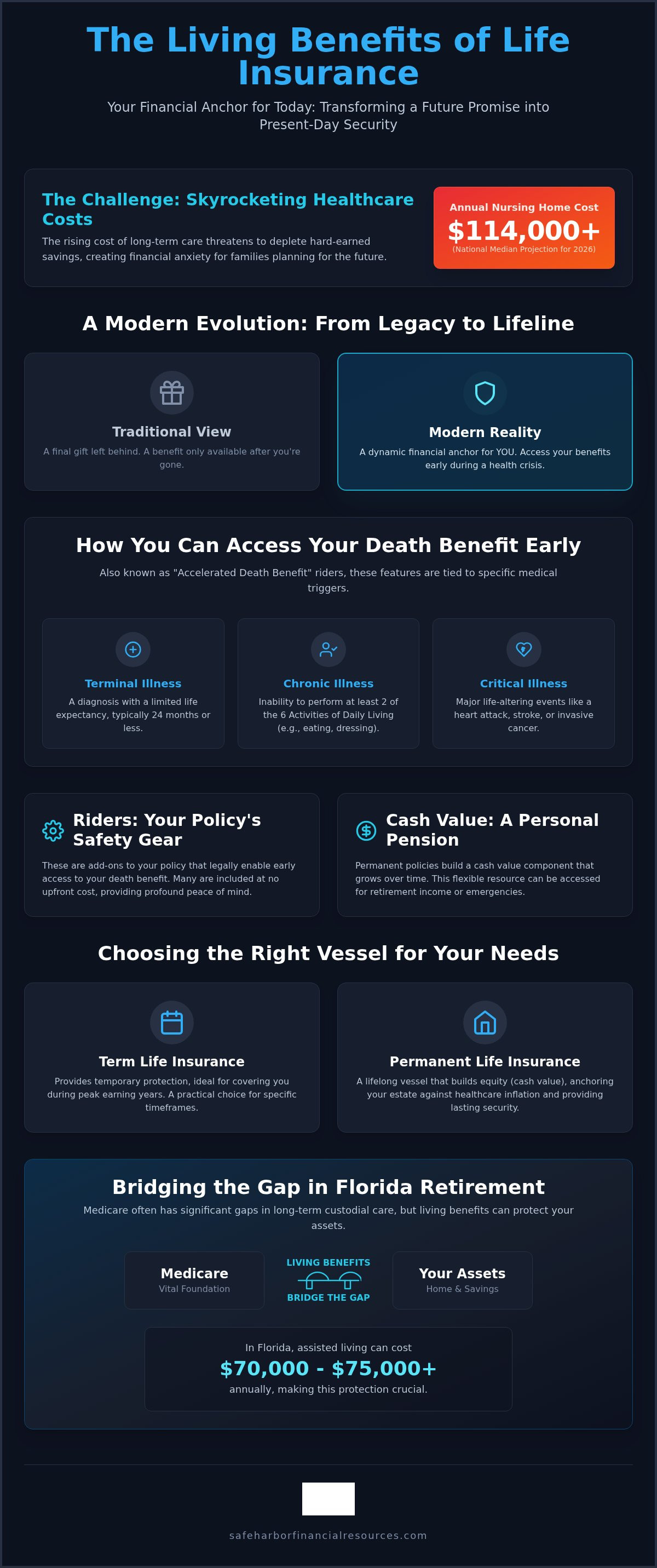
Accessing these funds isn't an on-demand withdrawal; it's tied to specific medical triggers that verify your need for support. Most modern policies focus on three main categories of health transitions:
Terminal Illness: A diagnosis with a limited life expectancy, typically 24 months or less, allowing you to settle affairs or seek experimental care.
Chronic Illness: The inability to perform at least two of the six daily living activities, such as eating or dressing.
Critical Illness: Major life-altering events like a heart attack, stroke, or invasive cancer.
How Riders Turn a Policy into a Financial Anchor
Think of these benefits as extra anchors for your vessel. While your base policy provides a safe harbor for your family's future, riders are the specialized tools that keep you steady during a sudden health storm. Whether you choose whole life or Universal life insurance, these riders are the legal mechanisms that make acceleration possible. Some providers include basic living benefit riders at no upfront cost, while more robust options might require a small additional premium. They offer a profound sense of calm, ensuring that a medical diagnosis doesn't lead to a financial shipwreck for your household.
The Core Components of a Living Safety Net: Riders and Cash Value
A robust strategy for the living benefits of life insurance relies on three specific riders. These function as specialized safety gear for different medical scenarios. The Terminal Illness rider provides funds for end-of-life care when life expectancy is short. Chronic Illness riders trigger when you can't perform basic daily activities, effectively helping to manage long-term care needs. Finally, Critical Illness riders offer a financial cushion following acute events like a stroke or heart attack. Each of these utilizes the Accelerated Death Benefit, allowing you to receive a portion of your payout early to fund treatment or essential living expenses.
Permanent policies offer an additional layer of security through cash value accumulation. This isn't just a stagnant reserve. You can Utilize Life Insurance For Retirement Income, creating a personal pension that you can access during your golden years. It acts as a flexible resource for emergencies or opportunities, growing steadily to provide a sense of enduring peace. This cash component turns your policy into a versatile tool that adapts as your life transitions from building wealth to enjoying it.
Permanent vs. Term: Choosing the Right Vessel for Your Needs
Selecting the right policy depends on the length of your voyage. Term life insurance is a practical choice for temporary protection, providing riders that cover you during your peak earning years. Permanent life insurance, however, is a lifelong vessel that builds equity. With the national median cost for a semi-private nursing home room rising over $114,000 in 2026, many families use the living benefits of life insurance to anchor their estates against healthcare inflation. If you're weighing your options, a personalized policy assessment can help you decide which vessel best secures your family's horizon.
Integrating Living Benefits into Your Florida Retirement Strategy
Medicare provides a vital foundation for seniors, but it often leaves significant gaps regarding long-term custodial care. In Florida, where assisted living costs average between $70,000 and $75,000 annually in 2026, these expenses can quickly erode your personal savings. The living benefits of life insurance act as a sturdy bridge between your government coverage and your private assets. By choosing Life Insurance With Living Benefits, you create a private reservoir of funds that can be accessed when health transitions require more than what standard insurance offers.
This strategy is particularly effective for protecting your legacy from the rising tide of medical costs. It's not just about paying for care; it's about ensuring your home and estate stay within your family. You can find detailed guidance on How to Protect Assets from Nursing Home Costs in Florida to see how these tools work together. This approach replaces anxiety with a sense of calm stability, allowing you to focus on your well-being rather than your bank balance.
Securing Your Harbor: Why Local Expertise Matters in Palm Beach Gardens
Navigating the complex landscape of Florida's insurance regulations requires a steady guide who understands our specific local resources. In Palm Beach Gardens, having a protective mentor by your side ensures that your retirement remains a safe harbor. We believe major life transitions should be celebrated as milestones of a life well-lived, not feared as sources of financial stress. If you're ready to bring professional precision to your planning, we invite you to reach out for a complimentary professional assessment. Let's work together to ensure your future is anchored in security and peace of mind.
Anchoring Your Future with Confidence
The living benefits of life insurance have transformed a traditional legacy tool into a powerful resource for your current well-being. By utilizing specialized riders and strategic cash value, you can bridge the gap between Medicare and your personal savings. This ensures that a health crisis doesn't become a financial shipwreck for your family. These modern policies provide the stability you need to navigate life's transitions with grace and certainty.
At Safe Harbor Financial Resources, our licensed Florida professionals act as your steady guide through these complex waters. We offer a personalized, maritime-themed consultation process that explores the synergy between your Medicare plan and life insurance options. Don't leave your retirement to chance. We invite you to Request a Complimentary Living Benefits Assessment with Safe Harbor today. Securing your harbor is a celebratory step toward the peaceful retirement you deserve. We're here to help you anchor your future with precision and care.
Frequently Asked Questions
Can I use living benefits for anything, or only medical bills?
Once you meet the medical requirements for a claim, you generally have full control over how to spend the funds. While many people use them for medical bills or specialized care, you can also use the payout to pay off a mortgage, modify your home for accessibility, or even fund a final family vacation. This flexibility allows you to maintain your quality of life during a difficult transition.
Do living benefits reduce the amount my beneficiaries receive?
Yes, accessing the living benefits of life insurance will reduce the final amount your beneficiaries receive. Because you're essentially spending a portion of the death benefit while you're still alive, that amount is subtracted from the total payout. It's a trade-off that provides you with immediate security today while still leaving a smaller, yet meaningful, legacy for your loved ones later.
Are living benefit payouts considered taxable income in Florida?
In most cases, these payouts are received income-tax-free. Federal law generally protects these benefits from taxation if you have a terminal or chronic illness diagnosis. In 2026, the IRS per-diem limit for tax-advantaged chronic illness benefits is $430 per day. Because Florida doesn't have a state income tax, you won't face any additional state-level tax burdens on these funds.
Can I add living benefits to an existing life insurance policy?
Adding these features to an existing policy can be challenging. Most companies require you to select living benefit riders when you first purchase the contract. While some carriers might allow you to add a rider later through a new medical review, it's often more efficient to update your coverage. A steady guide can help you determine if your current vessel can be modified or replaced.


Comments